
Why Garment Production for Netherlands Brands Is More Than Just a Factory
Garment production for Netherlands brands is not just about selecting a factory in India. It requires structured control over fabric, fit development, sampling, and bulk consistency. Without this, even well-designed T-shirts or hoodies can fail during production scale.
Netherlands buyers typically expect stability across orders, not just a good sample. This means every stage-from fabric selection to finishing-must be aligned before bulk production begins.
Understanding Oversized T-Shirts: Fit Development Matters
Oversized garments are not created by simply increasing measurements. Netherlands fashion brands focus heavily on silhouette and fall.
A well-developed oversized T-shirt requires:
| Element | What It Affects |
|---|---|
| Shoulder drop | Overall streetwear look |
| Body width vs length | Balance of fit |
| Sleeve length | Visual proportion |
| Neck rib structure | Shape retention |
Without proper pattern development, oversized T-shirts lose structure and consistency in bulk.
Fabric Selection for T-Shirts & Hoodies
Fabric choice directly impacts garment performance. Two fabrics with the same GSM can behave very differently depending on yarn and knit structure.
| Product | Recommended GSM | Fabric Type | Outcome |
|---|---|---|---|
| T-Shirts | 180-220 GSM | Regular cotton jersey | Soft, everyday wear |
| Premium T-Shirts | 220-260 GSM | Compact cotton | Structured fall |
| Hoodies | 280-320 GSM | Loop knit fleece | Breathable, stable |
| Heavy Hoodies | 320-400 GSM | Brushed fleece | Warm, premium feel |
For garment production for Netherlands brands, selecting the right fabric is more important than optimizing price.
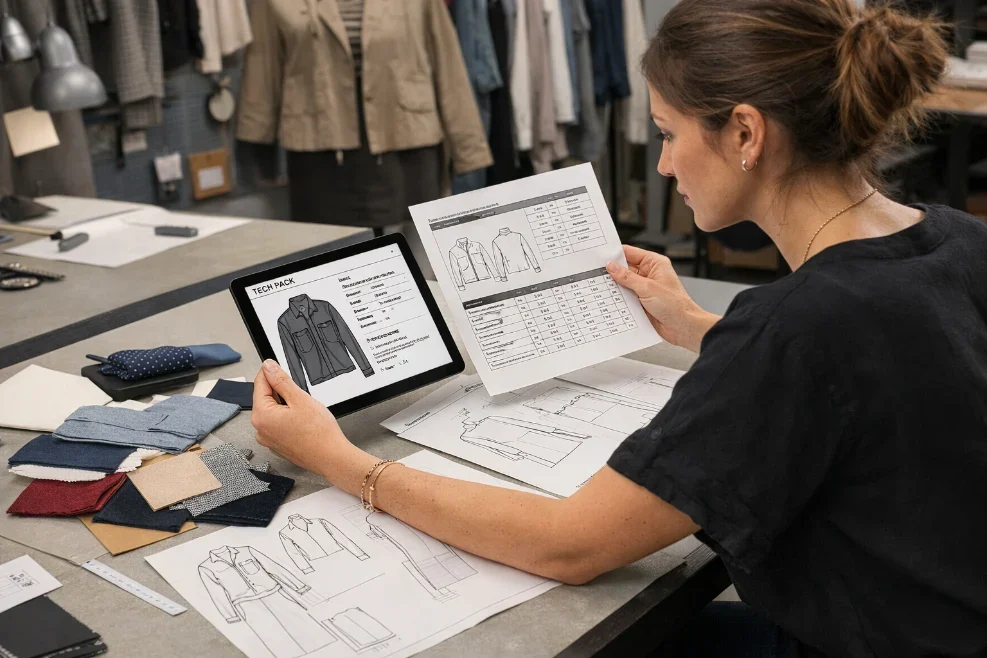
Brushed Fleece vs Loop Knit Hoodies
Hoodie construction is often misunderstood. The difference between loop knit and brushed fleece affects both comfort and durability.
| Type | Key Feature | Best Use |
|---|---|---|
| Loop Knit | Breathable inner loops | Mid-weight hoodies |
| Brushed Fleece | Soft brushed inside | Winter / premium hoodies |
Brushed fleece provides a softer feel but requires controlled washing to avoid shrinkage or distortion.
From Sample to Bulk: Controlling Production
One of the biggest risks in garment production for Netherlands brands is inconsistency between sample and bulk.
A structured sampling process includes:
Proto sample (initial development)
Fit sample (measurement validation)
PP sample (bulk approval reference)
Skipping these steps often results in:
Fit variation
Fabric inconsistency
Print or wash defects
Controlled sampling reduces these risks significantly.
Common Issues Faced by Netherlands Buyers
Many Netherlands brands face similar challenges when sourcing from India:
Bulk not matching approved sample
Fabric feel changing after wash
Neck rib losing shape
Size variation across production
These issues are not due to lack of capability, but due to lack of process control across vendors.
A Structured Approach to Garment Production
Successful garment production for Netherlands brands depends on coordination, not just manufacturing.
A stable system includes:
Fabric validation before production
Pattern and fit approval
Vendor alignment across processes
Inline quality checks during production
Final inspection before shipment
This ensures repeatability across orders.
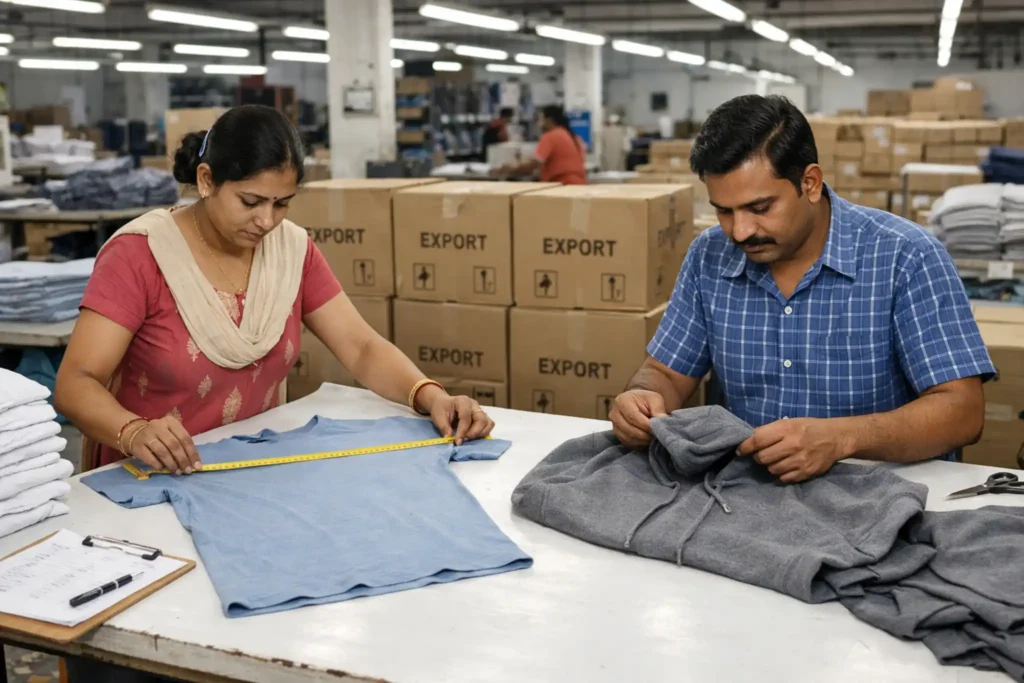
Why India Works for Netherlands Knitwear Programs
India, particularly Tiruppur, offers strong advantages:
Expertise in cotton knitwear
Flexibility for private label production
Established export systems for EU markets
Capability for T-shirts, hoodies, and oversized garments
However, the outcome depends on execution control, not just factory selection.
A Practical Way to Start
For Netherlands brands developing new collections:
Start with limited styles
Focus on fabric and fit accuracy
Validate wash and finishing
Scale only after consistency is achieved
This reduces production risk and improves long-term stability.
Conclusion
Garment production for Netherlands brands is not about finding the cheapest manufacturer. It is about building a controlled, repeatable system that delivers consistent quality across every order.
For T-shirts, hoodies, and knitwear, success depends on fabric selection, fit development, and production coordination. When these are managed properly, India becomes a reliable sourcing base for long-term growth.
FAQ
What is garment production for Netherlands brands?
It refers to sourcing and manufacturing garments in countries like India while meeting EU quality and consistency standards.
What GSM is best for oversized T-shirts?
Typically 220-260 GSM compact cotton provides a structured and premium fit.
What fabric is best for hoodies?
Brushed fleece (300-400 GSM) for softness or loop knit for breathability.
How to avoid bulk production issues?
By following a structured sampling process and maintaining quality control during production.
Is India reliable for Netherlands buyers?
Yes, when production is properly managed and coordinated across all stages.