What Is a Tech Pack in Garments?
A tech pack – short for technical package – is the most important document in the apparel industry.
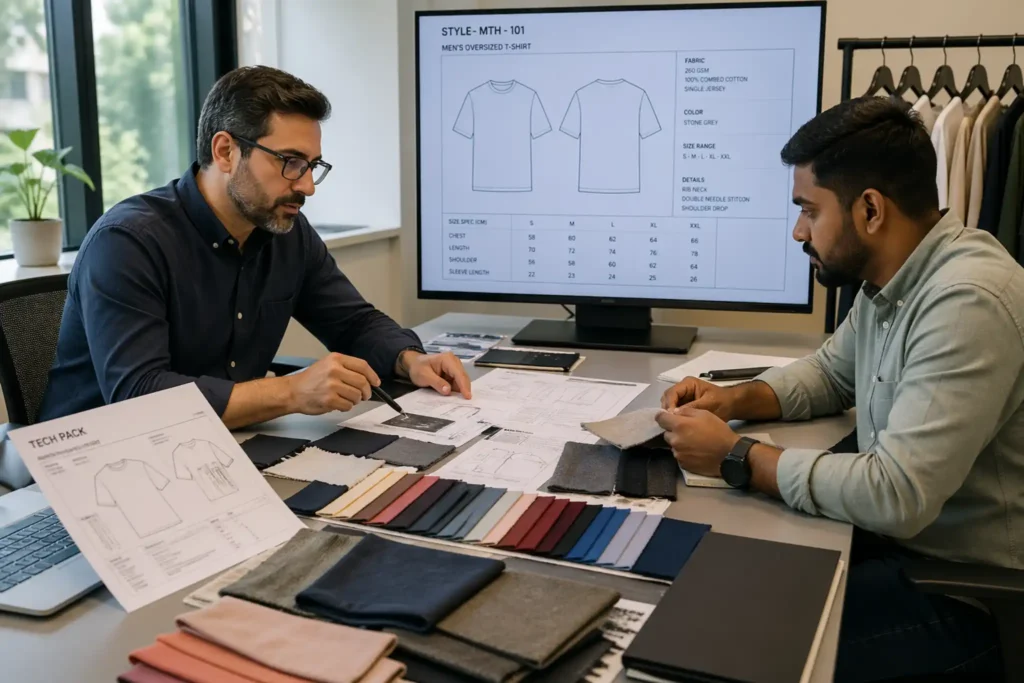
It acts as the blueprint of a garment, guiding manufacturers through every step of production, from concept to the final stitched piece.
Without a detailed tech pack, even the best ideas can turn into misfits, delays, or production errors.
At Mirthuni Apparel, tech packs form the backbone of every sampling and manufacturing project. They ensure accuracy, consistency, and smooth communication between buyers, designers, and factories.
Learn more about how India’s knitwear hubs power global sourcing through our guide on US-Compliant Apparel Sourcing: Why Indian Manufacturers Make the Cut.
1. Definition and Purpose
A tech pack is a detailed document prepared by a fashion brand or designer that contains all the necessary technical information to produce a garment exactly as intended.
It bridges the gap between design and production, allowing factories to understand:
What the garment should look like
What materials and trims to use
How it should be constructed and finished
What measurements and tolerances to maintain
Why It Matters
Ensures clarity between brand and manufacturer
Reduces sampling revisions
Helps calculate accurate costing and fabric consumption
Avoids quality misunderstandings across multiple production runs
2. Components of a Professional Tech Pack
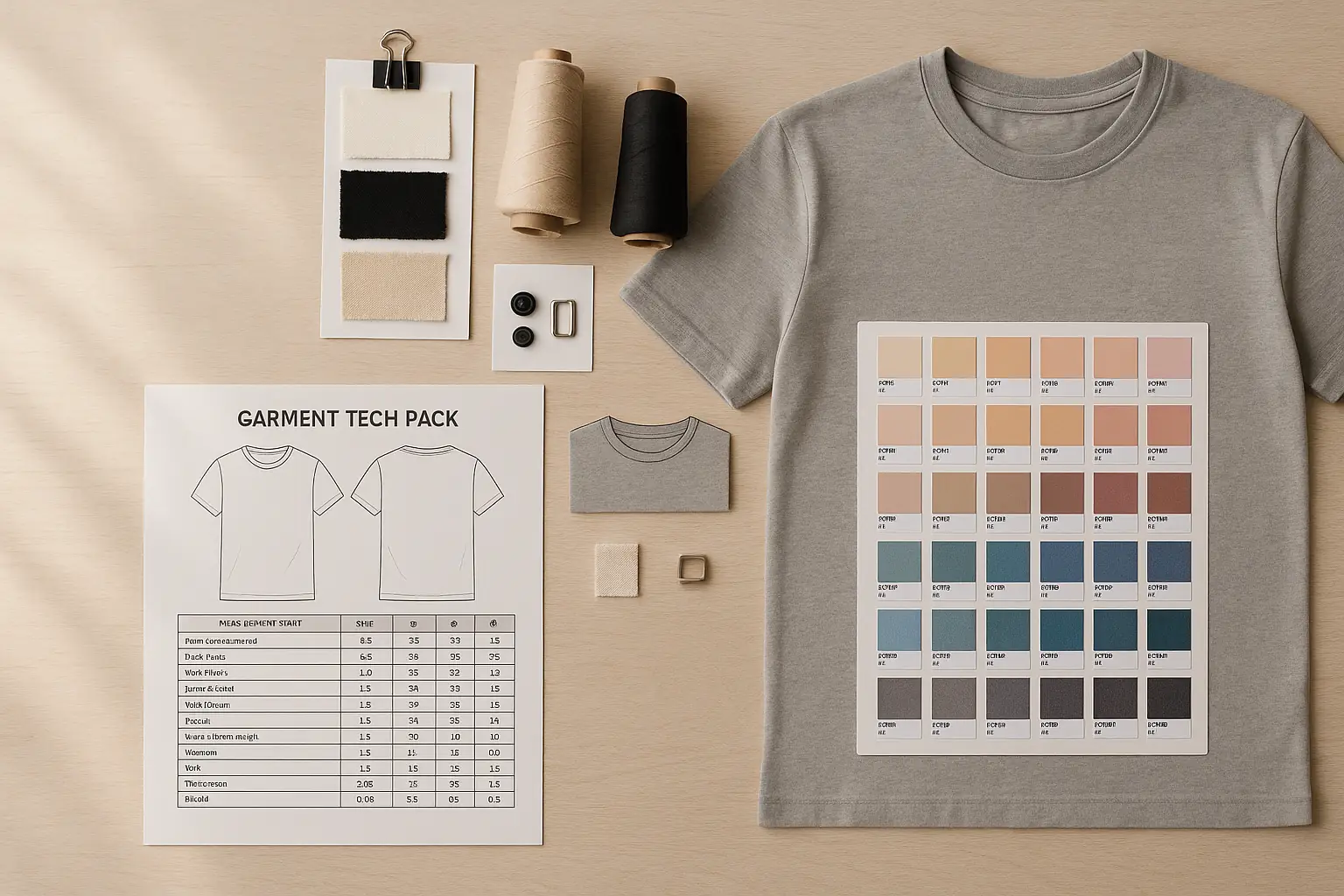
A complete tech pack typically contains several structured sections. Each section tells the factory what to do and how to do it.
| Section | Purpose / Example |
|---|---|
| Technical Sketches (Flats) | Shows front, back, and side views with seam lines, pockets, zippers, and stitching details. |
| Bill of Materials (BOM) | Lists all fabrics, accessories, labels, and threads — including supplier names and codes. |
| Measurement Specs | Includes base size (usually M) with grading for S, L, XL, and tolerances (+/– allowances). |
| Fabric Information | Details GSM, weave/knit type, fiber content, finishing, and color codes (Pantone or swatch ID). |
| Print & Embroidery Details | Placement diagrams, artwork references, and dimensions. |
| Construction Notes | Specifies seam type, stitch density, edge finishing, and hemming style. |
| Branding & Packaging | Placement of main and size labels, hang tags, folding method, and carton details. |
Pro Tip:
Factories often rely more on visual accuracy than text. Always pair notes with annotated sketches or diagrams for clarity.
3. The Role of Tech Packs in the Manufacturing Process
Once a tech pack is shared with a manufacturer, it becomes the central reference throughout all production stages.
At Mirthuni Apparel, the workflow looks like this:
Tech Pack Review – Our sourcing team checks technical feasibility, fabric availability, and construction logic.
Fabric & Trim Sourcing – We locate materials matching the provided specs or suggest locally available alternatives.
Sampling Stage – The sample is created strictly based on the tech pack details.
Comments & Revisions – Any changes from the buyer are marked in Version 2 of the tech pack for clarity.
Bulk Production – Factories follow the latest approved tech pack to maintain consistency.
Quality Control & Final Inspection – Every checkpoint refers back to the tech pack as the “master checklist.”
This version-controlled approach minimizes confusion and protects both the buyer and the manufacturer.
A well-defined tech pack supports transparent communication and consistent production quality. You can explore our in-depth post on quality control in Tiruppur streetwear manufacturing to see how technical documentation connects with inspection protocols.
4. Example: Tech Pack for a Men’s T-Shirt
Here’s a simplified example that demonstrates what a real-world tech pack might include:
| Parameter | Specification |
|---|---|
| Product | Men’s Round Neck T-Shirt |
| Fabric | 100% Cotton, 220 GSM Compact Combed Single Jersey |
| Stitch Type | 4-Thread Overlock, 1 cm Seam Allowance |
| Measurement (M) | Chest: 52 cm Length: 70 cm Sleeve: 22 cm |
| Label | Woven Size + Main Brand Label at Neck |
| Rubber Chest Logo, 10 cm Width, Centered | |
| Packing | Folded, Polybag, 10 pcs per Carton |
This single document ensures that every production team – from pattern master to QC supervisor – interprets the same details without guesswork.
5. Common Mistakes in Tech Packs
Even experienced brands sometimes miss key details. Here are the most common errors our team encounters during sourcing:
Missing or inconsistent measurement tolerances
Unclear print or embroidery placements
No mention of fabric finish (bio-wash, enzyme wash, etc.)
Color references without Pantone codes
Skipped construction details (stitch type, hem type)
Not updating the tech pack after revision rounds
✅ Tip: Always version your tech packs (e.g., TechPack_V1, V2, V3) so factories never confuse older versions.
For brands working with a private label clothing manufacturer in India, a well-prepared tech pack plays a critical role in aligning design intent with sampling, bulk production, and quality control expectations.
6. How a Well-Made Tech Pack Saves Time and Cost
A well-structured tech pack can cut development time by 40–50%.
Here’s how it impacts your overall workflow:
Fewer Sample Rounds: Clear details mean fewer corrections.
Accurate Costing: Factories can estimate fabric, trims, and time precisely.
Reduced Communication Lag: Eliminates back-and-forth clarifications.
Better Quality Control: Each stage – cutting, stitching, finishing – follows one reference file.
Faster Bulk Approvals: Consistency speeds up buyer confirmation and dispatch.
For sourcing agents like Mirthuni Apparel, this clarity is crucial when coordinating with multiple certified factories across Tiruppur.
Choosing the right materials also plays a major role in efficiency and cost control. See our detailed breakdown of sustainable fabrics for private label clothing brands to understand how responsible sourcing complements accurate tech packs.
7. Creating a Tech Pack: Step-by-Step Guide
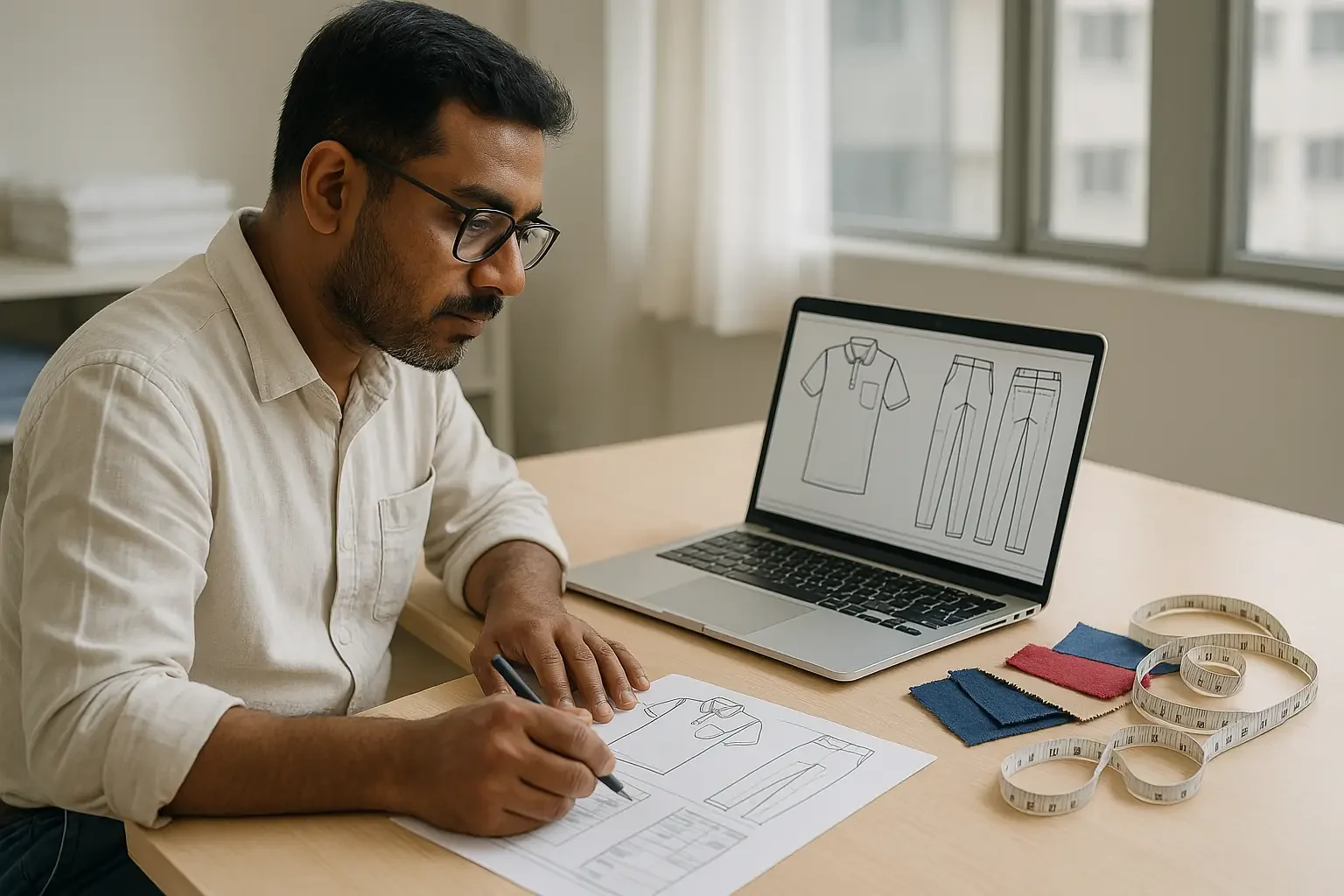
Building a tech pack is a precise process that should always be handled by skilled apparel professionals. Never use AI tools or automated generators – there’s too much money involved, and small mistakes can lead to costly production errors. Hire an experienced fashion designer or technical developer who understands fabrics, grading, and garment construction.
Basic flow:
Flat sketches – Front and back views with all stitching and seam details.
Bill of materials – Fabrics, trims, and color references.
Measurement chart – Base size specs with grading for other sizes.
Artwork placement – Print or embroidery dimensions and positions.
Construction notes – Stitch type, seam allowance, finish method.
Branding & packaging – Labels, folding, and packing instructions.
Keep versions organized (V1, V2, V3) and clearly note all revisions.
Once your tech pack is finalized, Mirthuni Apparel can review it and provide accurate costings, MOQ, and lead times based on verified specifications.
8. Why Indian Manufacturers Value Detailed Tech Packs
In India’s export-oriented hubs like Tiruppur, Noida, and Bangalore, a detailed tech pack ensures:
Better communication between designers and production teams
Streamlined quality inspection
Smooth transition between sampling and bulk stages
Efficient factory handovers between departments (cutting → stitching → finishing)
At Mirthuni Apparel, every tech pack is cross-checked by our technical department before production begins.
We verify measurements, fabric details, and print placements to ensure that samples meet global buyer expectations.
Many export-focused factories in Tiruppur follow structured compliance systems that benefit overseas buyers.
If you’re sourcing for the UK market, see our dedicated guide to UK apparel sourcing from India.
9. Why We Request a Tech Pack Before Quoting or Sampling
At Mirthuni Apparel, we treat the tech pack as the foundation for every quotation and sampling stage.
It’s not just a document – it’s what allows us to provide accurate pricing, realistic lead times, and MOQ recommendations without guesswork.
A clear and detailed tech pack helps us:
Evaluate fabric sourcing feasibility (availability, GSM, dyeing method).
Determine print or embroidery costs precisely based on artwork size and technique.
Estimate stitching time, trims, packaging, and finishing requirements.
Suggest the most efficient factory line allocation depending on style complexity.
Without a Tech Pack
When a brand approaches us without one, we can only give approximate estimates, not confirmed quotations – because critical factors like:
Fabric type and GSM
Artwork placement
Size breakdown
Trim details
directly influence the cost and MOQ.
Our Process
You share your finalized tech pack (PDF, Excel, or Illustrator format).
Our technical team reviews it carefully.
We then provide a precise quotation, MOQ, and lead time based on verified production parameters.
This structured approach ensures that when we proceed to sampling, every step – from fabric sourcing to finishing – aligns with your intended specifications.
10. Conclusion
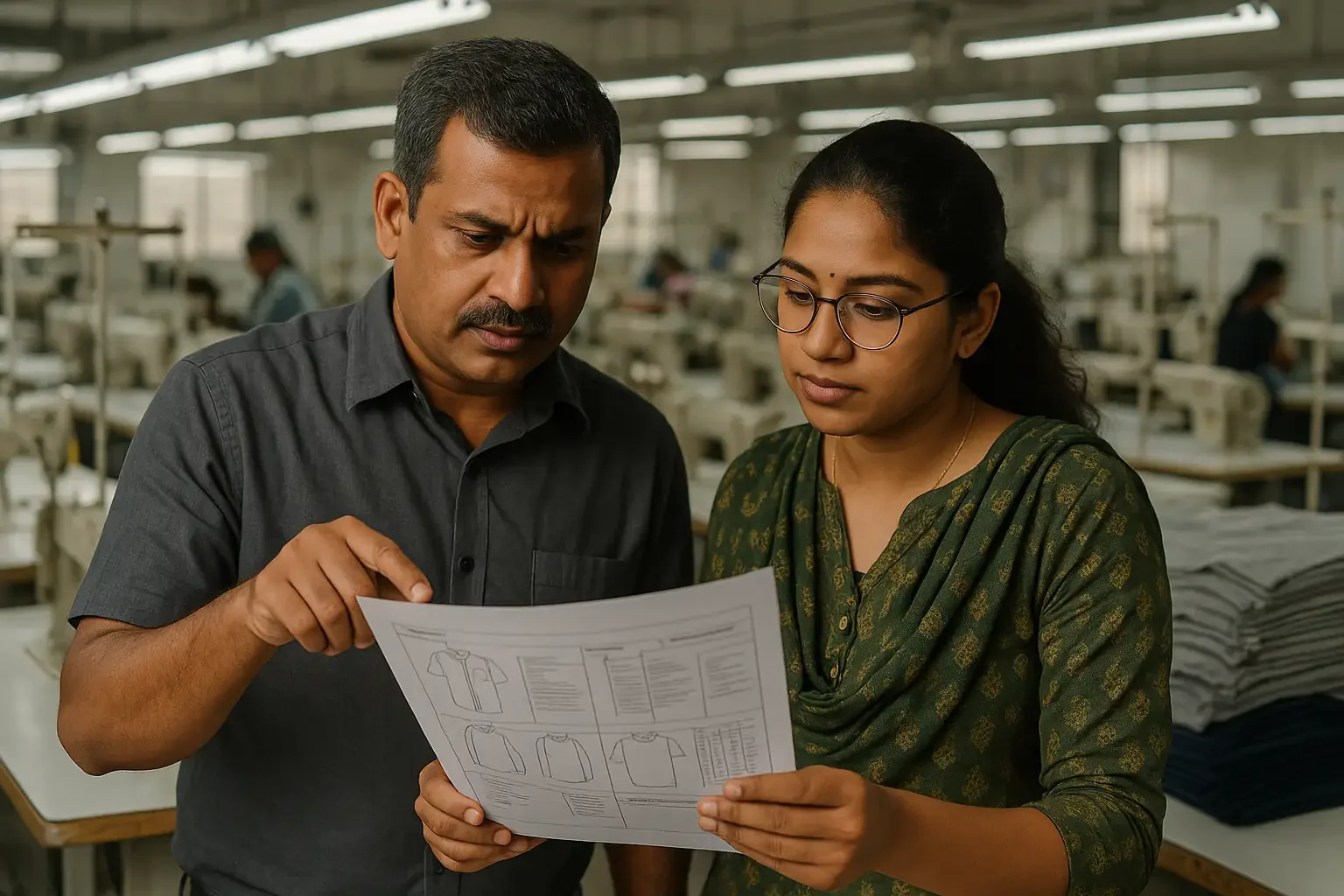
A tech pack is more than a document; it is the foundation of every successful garment. It translates creative ideas into factory-ready instructions, ensuring your final product matches the exact vision you had during design.
When executed properly, it saves money, reduces waste, and strengthens the relationship between brand and manufacturer.
At Mirthuni Apparel, we treat every tech pack as a precision tool that guides our partner factories across Tiruppur to deliver export-quality garments for global brands.
Once you have your finalized tech pack, send it to [email protected] to receive an accurate quotation, MOQ, and lead time for your program.