Table of Contents
Choosing the right manufacturing partner is one of the most critical decisions for any apparel brand. While many new brands assume that price and minimum order quantity are the deciding factors, experienced buyers follow a much more structured evaluation process.
If you are planning to choose a clothing manufacturer, understanding how buyers actually think can help you avoid costly mistakes and build a reliable supply chain from the beginning.
This guide explains the real-world criteria used by sourcing managers, fashion brands, and importers when selecting a clothing manufacturer.
1. Product Capability Comes First, Not Price
Before discussing pricing, buyers first evaluate whether a manufacturer can actually execute the product.
This includes:
- Fabric capability (knits, woven, blends)
- Garment category expertise (t-shirts, hoodies, kidswear, etc.)
- Construction quality (stitching, finishing)
- Fit consistency across sizes
For example, a factory that produces basic t-shirts may not be suitable for structured garments or performance wear.
Key insight:
Buyers shortlist suppliers based on product match, not cost.
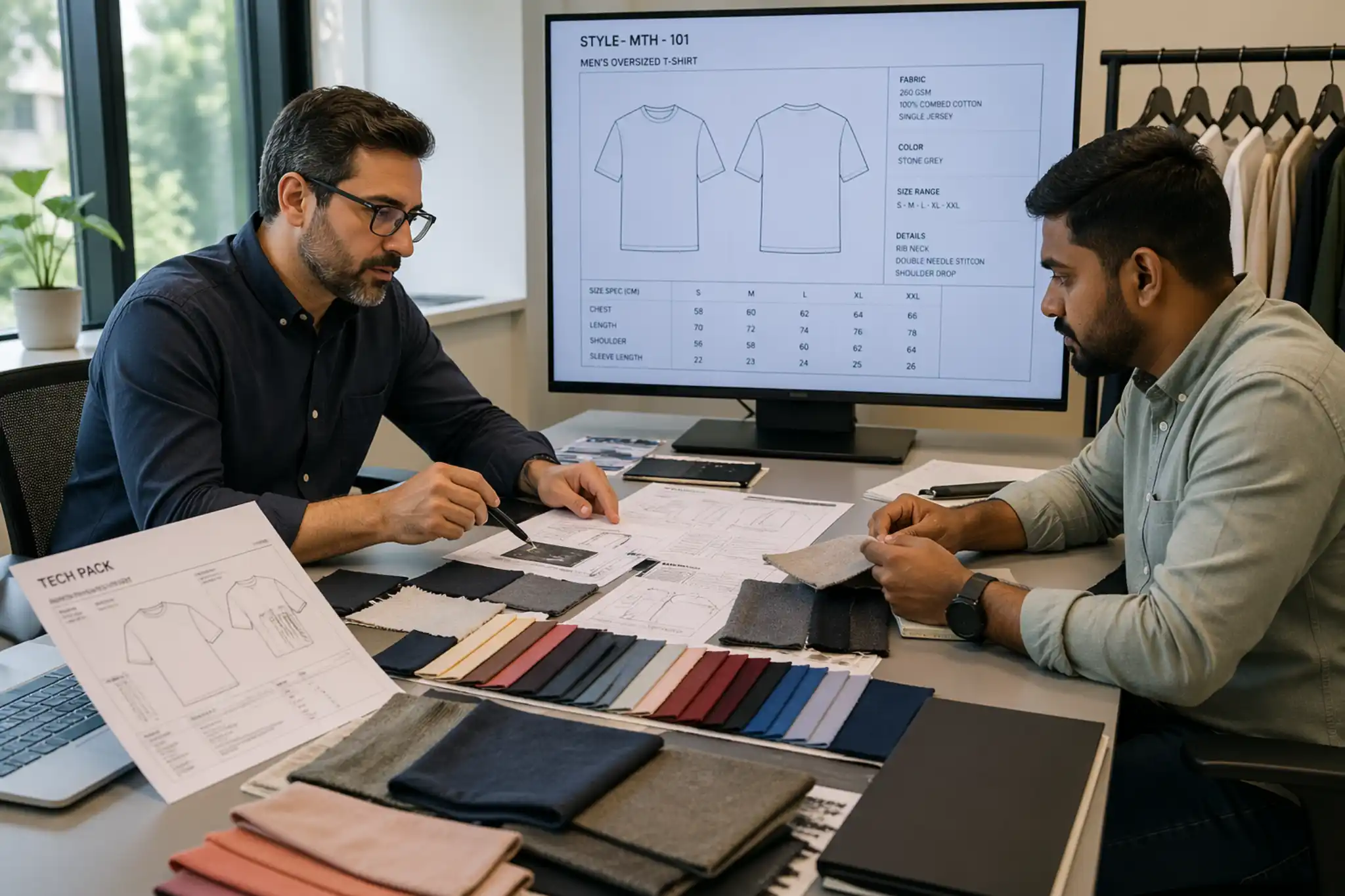
2. Tech Pack Understanding and Execution Ability
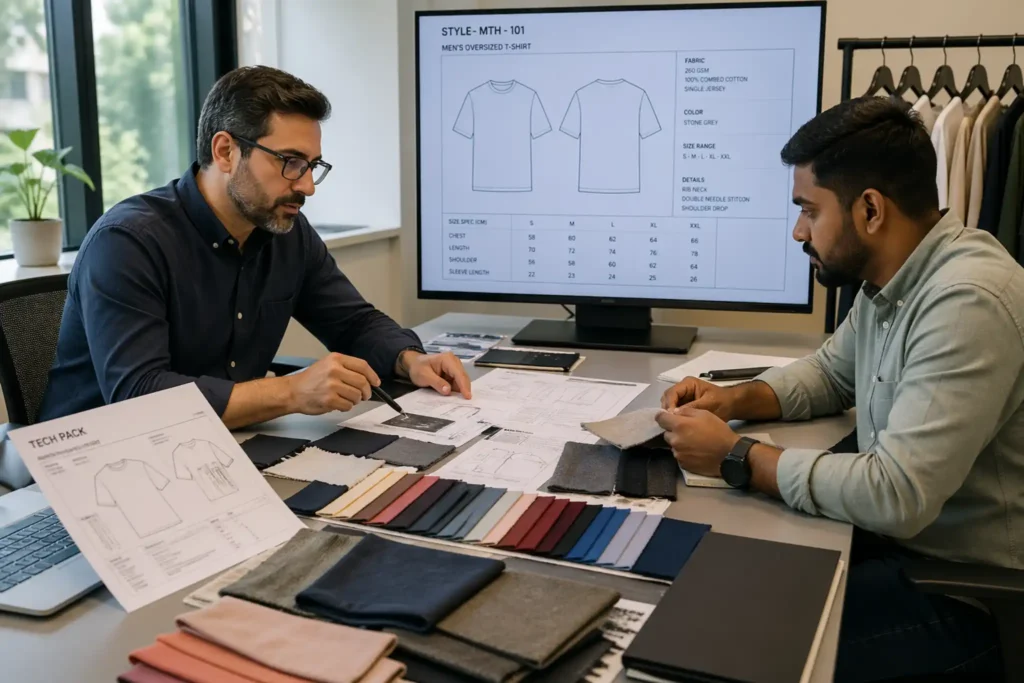
A serious buyer will always provide a tech pack. The manufacturer’s response to it reveals their capability.
Buyers look for:
- Clear understanding of measurements and tolerances
- Ability to suggest improvements
- Feedback on fabric feasibility
- Clarity on trims, prints, and finishing
If a supplier gives generic replies without reviewing details, it is usually a red flag.
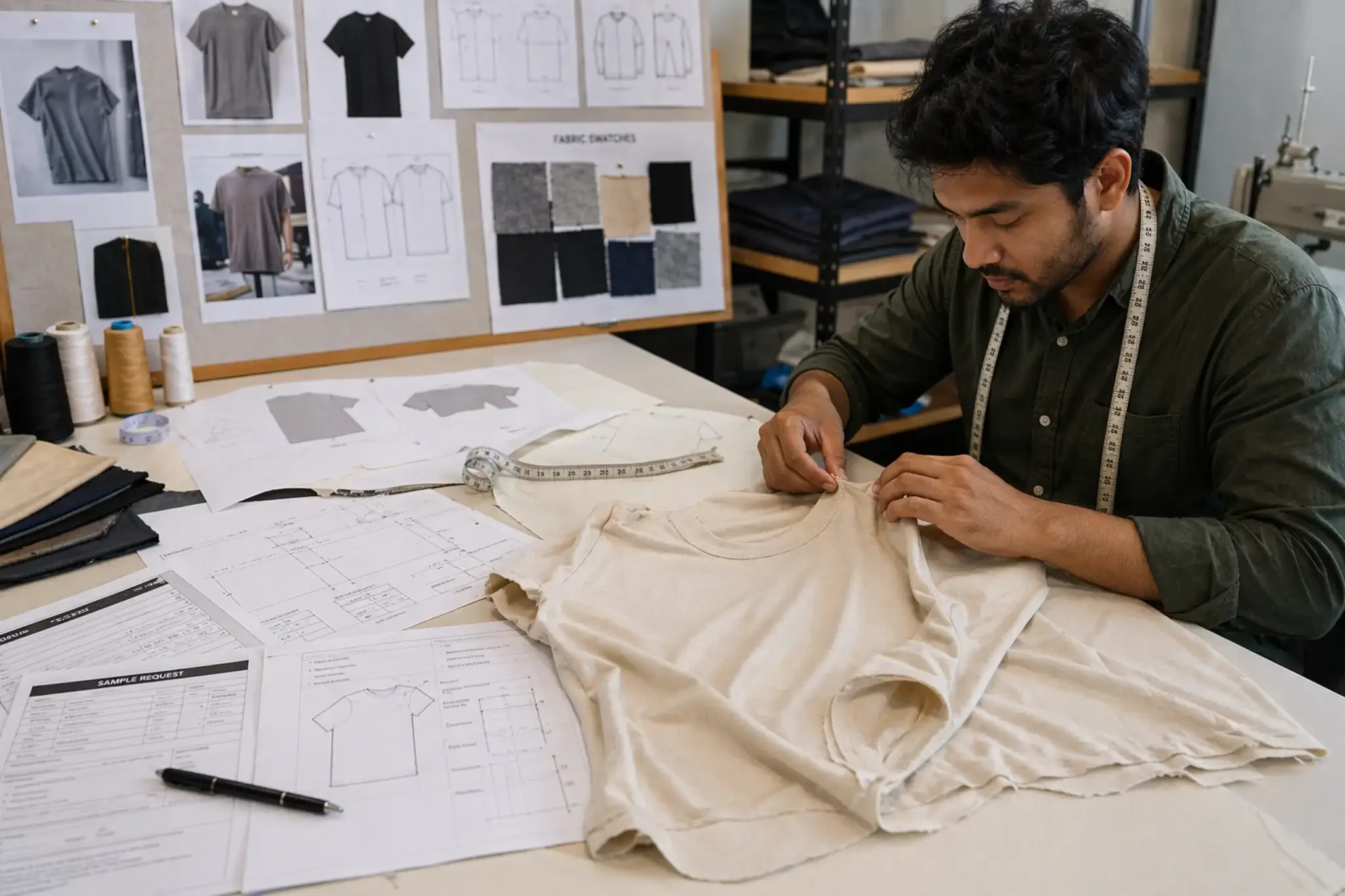
3. Sampling Approach and Accuracy
Sampling is where most supplier decisions are made.
Buyers evaluate:
- How closely the sample matches the tech pack
- Fabric quality and GSM accuracy
- Fit and construction consistency
- Communication during the sampling stage
A strong sampling process indicates that the supplier can handle bulk production with fewer issues.
4. Communication and Responsiveness
One of the biggest reasons buyers reject suppliers is poor communication.
Buyers prefer manufacturers who:
- Respond clearly and professionally
- Provide structured updates
- Ask the right questions before production
- Highlight risks early
In export programs, communication gaps often lead to delays, quality issues, and misunderstandings.
5. Transparency in Production Process
Experienced buyers want visibility into how production is handled.
They check:
- Whether the factory works from yarn or finished fabric
- How fabric sourcing is managed
- Production planning timelines
- Quality control checkpoints (inline and final inspection)
A transparent workflow builds confidence, especially for international buyers.
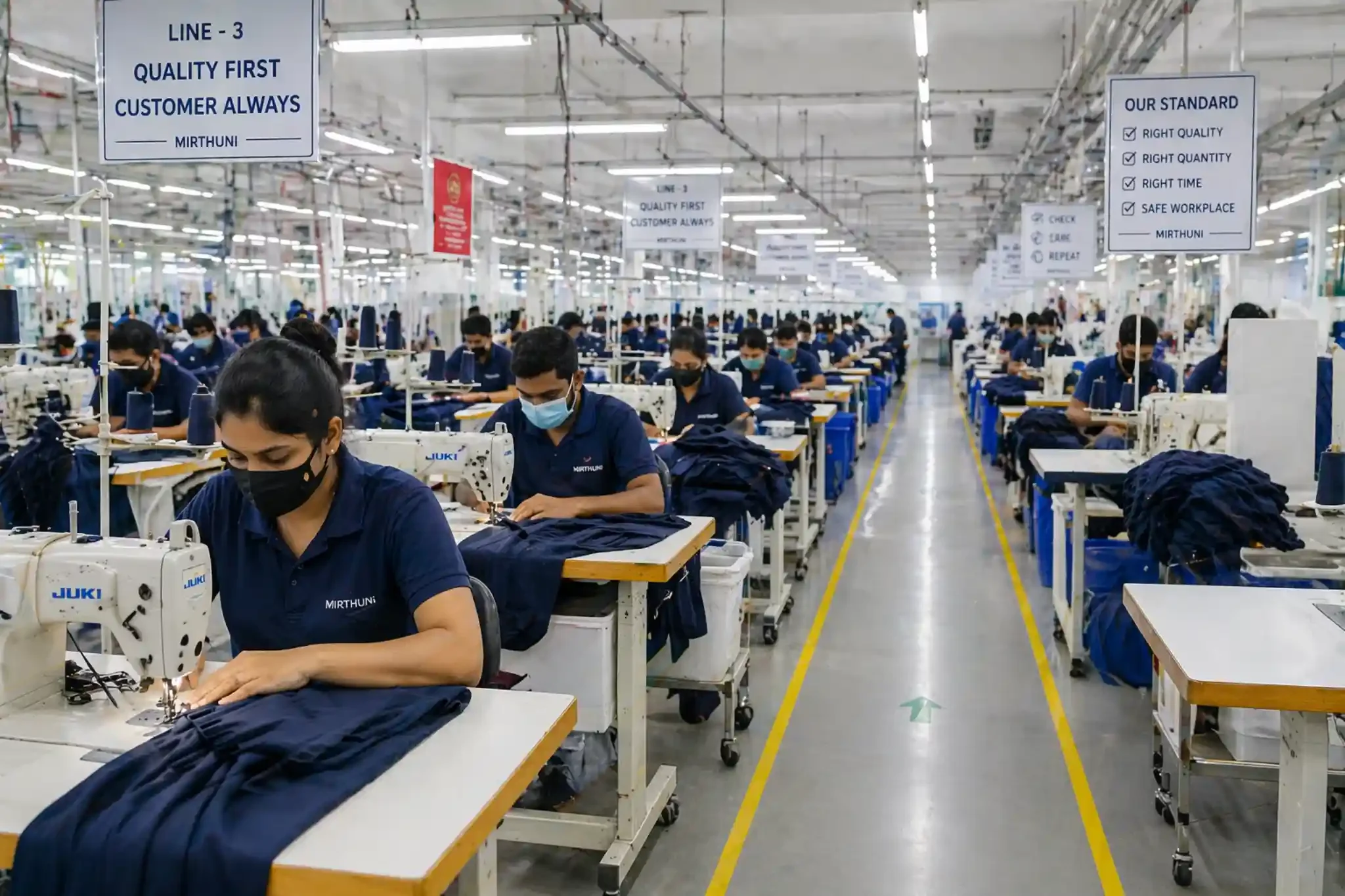
6. Quality Control Systems
Quality is not judged only by samples. Buyers want to know how consistency is maintained.
Important factors:
- Inline inspection process
- Final quality checks before shipment
- Handling of defects and rework
- Documentation and reporting
Factories that rely only on final inspection without inline control are considered high risk.
7. Compliance and Certifications (When Required)
For export brands, compliance plays a major role.
Buyers may require:
- Social compliance (BSCI, SEDEX, SA8000)
- Organic certifications (GOTS)
- Product safety standards
However, certifications alone are not enough. Buyers also verify whether the factory can maintain compliance during actual production.
8. MOQ Flexibility and Scaling Potential
MOQ is important, but buyers evaluate it in context.
They consider:
- Minimum order per color or style
- Fabric sourcing limitations (dyeing minimums)
- Ability to scale production later
A good manufacturer explains why MOQ exists, rather than just quoting a number.
9. Pricing Structure and Cost Transparency
Price comes into discussion only after capability is confirmed.
Buyers expect:
- Clear FOB or ex-factory pricing
- Breakdown of fabric, trims, and processes (when required)
- Stability in pricing across repeat orders
Unrealistically low pricing is often seen as a risk rather than an advantage.
10. Past Work and Execution Track Record
Buyers rarely rely only on claims. They look for proof.
This includes:
- Previous production samples
- Client references (when available)
- Experience with similar product categories
- Ability to handle export documentation
Even small brands can build trust by showing consistent past work.
11. Risk Handling and Problem-Solving Ability
No production is perfect. What matters is how issues are handled.
Buyers assess:
- How the supplier responds to defects
- Willingness to correct mistakes
- Communication during delays
- Practical solutions instead of excuses
This factor often determines long-term partnerships.
12. Long-Term Compatibility
Finally, buyers choose suppliers based on long-term alignment.
They consider:
- Whether the supplier can grow with the brand
- Consistency across multiple orders
- Professional approach to business
A slightly higher cost is often accepted if the supplier is reliable and scalable.
Common Mistake: Choosing Based Only on Price
Many new brands make the mistake of selecting the lowest-cost supplier.
This often leads to:
- Inconsistent quality
- Delayed shipments
- Miscommunication
- Higher long-term costs
Choosing the right manufacturer is not about finding the cheapest option, but about finding the most reliable execution partner.
Final Thoughts
To successfully choose a clothing manufacturer, you need to think beyond basic parameters like price and MOQ.
Serious buyers focus on:
- Product capability
- Sampling accuracy
- Communication
- Quality systems
- Execution reliability
A strong supplier relationship is built on clarity, consistency, and transparency.
If these factors are evaluated correctly, brands can avoid common sourcing risks and build a stable, scalable apparel business.
Product capability and execution reliability are the most important factors, not just price.
Through sampling, past production work, and quality control processes.
Sometimes, but it depends on fabric sourcing and production feasibility.
Common reasons include poor communication, lack of clarity, and inability to understand the tech pack.
Reliability is more important, as low-cost suppliers often lead to higher long-term issues.