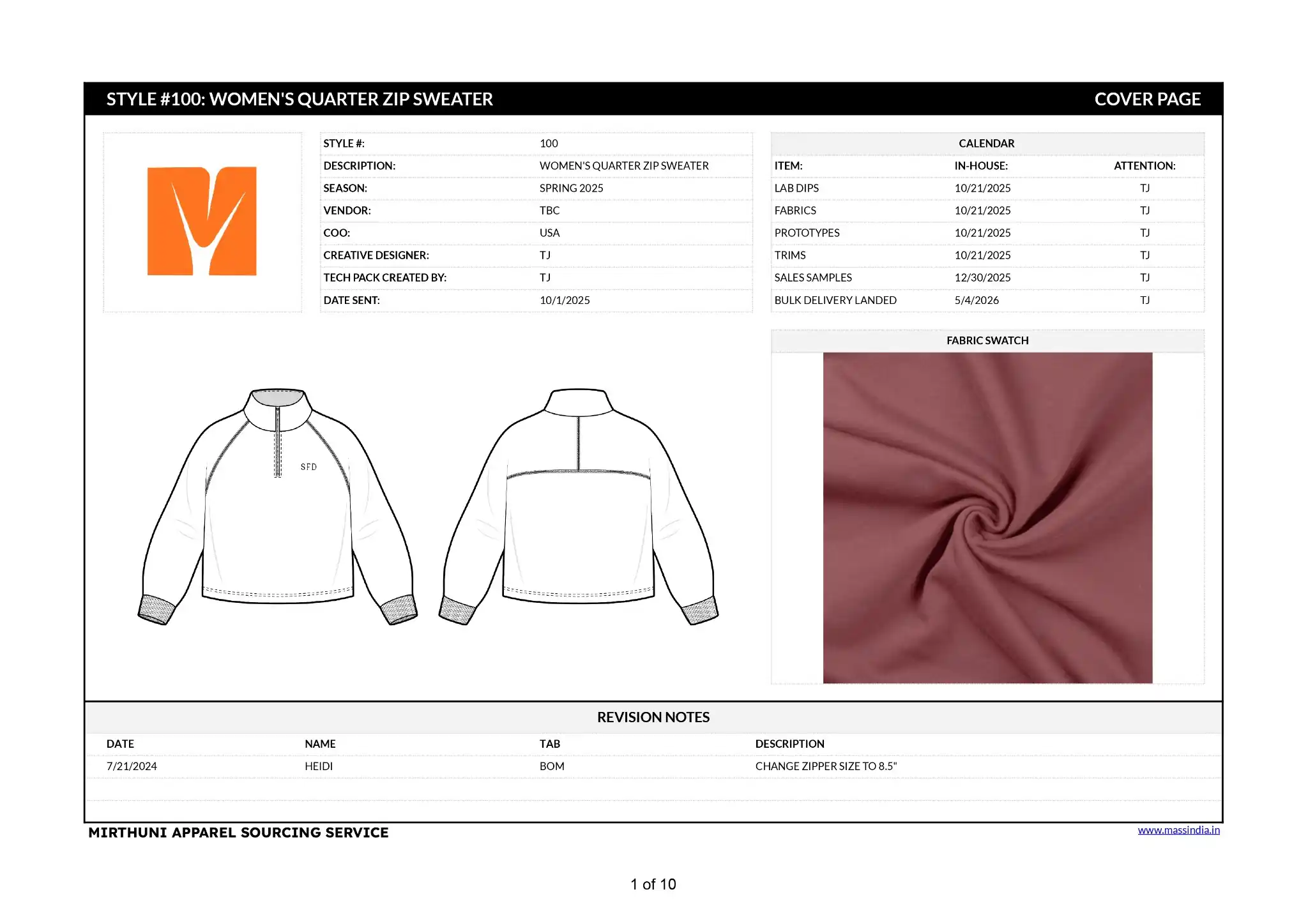
Across India, manufacturers are facing a silent but growing development problem. An increasing number of new brands are submitting tech packs and print files that look professionally made but repeatedly fail in sampling and bulk execution.
These files are commonly created using AI tools, Canva templates, automated fashion generators, or general graphic designers who are not trained in apparel engineering. While these files appear complete, they lack the manufacturing logic required to physically construct stable garments.
This gap between visual design and manufacturing engineering is now one of the leading causes of delayed sampling cycles, unstable bulk quality and rising production costs.
What a Real Apparel Tech Pack Controls
A professional tech pack is not a design presentation. It is a control document that governs how a garment will behave in production, washing, wearing and grading.
A real tech pack defines:
• Construction sequence and seam order
• Stitch density and tension behaviour
• Fabric relaxation and shrinkage control
• Pattern balance and panel symmetry
• Collar and rib stability logic
• Tolerance limits and grading rules
• Print placement behaviour on stretched panels
Most artificially generated tech packs only include flat drawings and static measurements. They do not define how fabric behaves under tension, how seams distribute load, or how garments recover after washing. This is why garments may technically match measurement tables but still feel unstable or incorrect when worn.
The Hidden Print File Problem
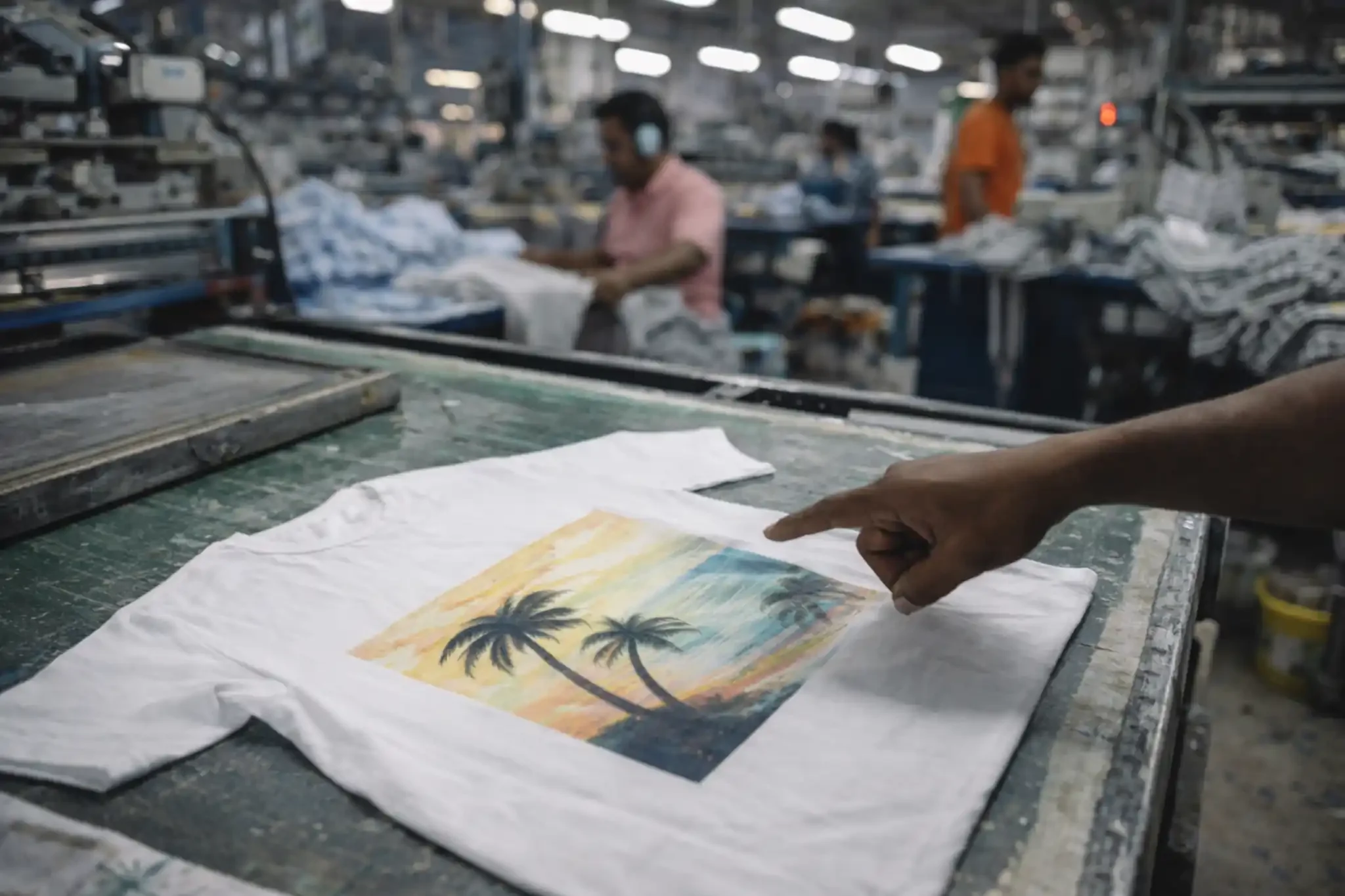
Print engineering is the most common point of failure in modern apparel development.
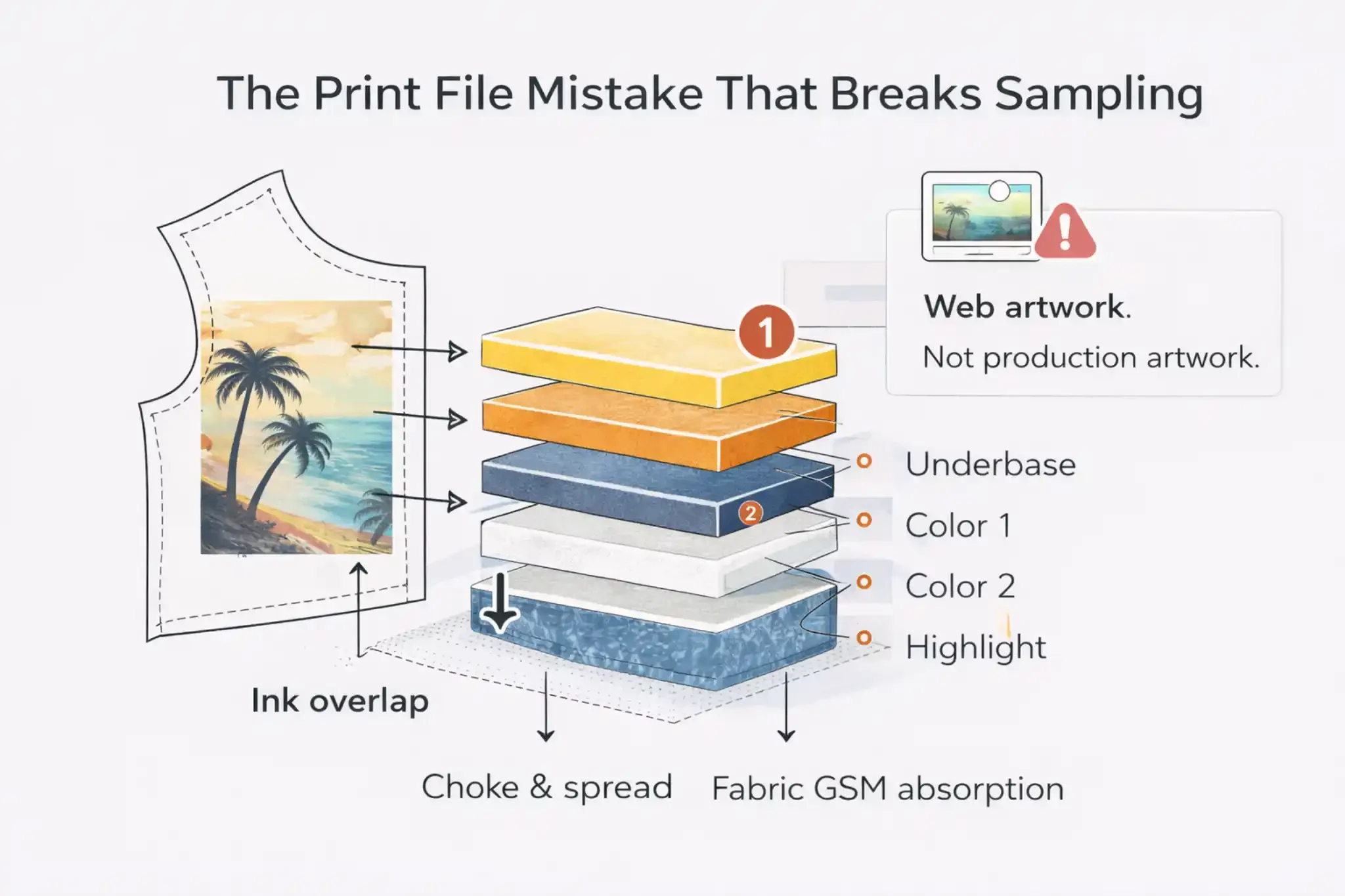
Most AI generated and Photoshop based design files are supplied as:
• Flat RGB images
• Single layer artwork
• Web resolution assets
• No ink separation logic
• No underbase layers
• No bleed or trapping control
• No GSM based ink compensation
Professional production printing requires color separated files in CMYK or spot channels with defined underbase structures, choke and spread tolerances, and fabric absorption mapping. When this information is missing, factories are forced to rebuild artwork manually. Every rebuild introduces uncontrolled variables.
This leads to:
• Color shifts
• Print cracking
• Halo edges
• Registration errors
• Durability loss after washing
These are not factory mistakes. They are design file architecture failures.
Why Artificially Generated Tech Packs Fail in Reality
AI systems treat garments as flat shapes. Real garments are three dimensional mechanical systems.
Manufacturing requires behaviour modelling such as:
• Knit shrinkage curves
• Rib recovery memory
• Bias panel distortion control
• Stitch tension load distribution
• Print penetration based on fiber density
• Collar torque stability
• Non linear grading curves
Artificially generated files use static math and cannot simulate these behaviours. This causes neck collapse, hem rolling, sleeve twisting, fit instability and unpredictable size variation after washing.
These problems only appear after physical sampling, by which time time and money have already been lost.
Graphic Designers Are Not Apparel Designers
Visual designers create layouts. Apparel designers engineer products.
A professional apparel designer understands:
• Pattern architecture
• Fabric behaviour mapping
• Stitch sequencing
• Shrinkage and wash recovery logic
• Grading proportional control
• Print behaviour on knit and woven fabrics
• Collar and rib stability design
Graphic designers and AI tools do not possess this manufacturing knowledge. Their files may look refined but they lack physical construction logic. Factories are then forced to guess missing engineering data, creating unstable sampling results.
The Real Cost to Brands
Development based on structurally incorrect files leads to:
• Multiple failed sample cycles
• Wasted fabric and trims
• Missed selling seasons
• Increased unit costs
• Factory distrust
• Reduced production priority
• Cancelled retail programs
These losses are rarely visible on invoices but directly damage brand credibility and long term sourcing stability.
How Brands Can Protect Their Development
To stabilise development and bulk execution, brands must:
• Use professional apparel designers
• Prepare production grade tech packs
• Supply separated print engineering files
• Define fabric behaviour before sampling
• Lock construction logic before costing
• Validate wash performance in development stage
This converts development from trial and error into controlled manufacturing.
How Mirthuni Apparel Sourcing Service Works
At Mirthuni Apparel Sourcing Service, sampling does not begin from visuals. Each program goes through an engineering audit that validates garment balance, print separation structure, fabric behaviour compatibility, construction sequencing and tolerance logic before any fabric is cut.
This protects cost structure, prevents failed sampling cycles and stabilises bulk planning.
Final Advisory to Brands and Buyers
If your current development process relies on AI generated tech packs, Canva designs or Photoshop only artwork, your program carries a high risk of sampling failure and unstable bulk execution.
Visual completeness does not equal manufacturing readiness.
Engineering logic does.
Before sampling, files must be physically buildable.