Yarn selection is one of the most important but least understood decisions in knitted garments manufacturing. Terms like carded cotton, combed cotton, and compact cotton are frequently mentioned during sampling and costing discussions, yet they are often misunderstood or oversimplified.
In real manufacturing environments, these terms do not represent “good, better, best” quality levels. Instead, they refer to different fiber preparation and spinning approaches, each suited to specific applications, price points, and performance requirements.
This guide explains carded, combed, and compact cotton yarns from a practical manufacturing perspective, helping buyers and sourcing teams understand how these yarn types are actually selected for knitted garments such as T-shirts, sleepwear, loungewear, kidswear, and streetwear.
Why Yarn Choice Matters in Knitted Garments
Knitted fabrics behave very differently from woven fabrics. Because knitting relies on inter-looped yarns, yarn quality and consistency have a direct impact on how the fabric looks, feels, and performs over time.
In knitted garments, yarn choice influences:
Surface smoothness and appearance
Hairiness and pilling tendency
Dimensional stability after washing
Fabric strength and recovery
Dye and print consistency
Two garments made with the same GSM and composition can still perform very differently depending on the yarn preparation and spinning method used.
Important Technical Clarification
Before comparing yarn types, one point must be clearly understood:
Carded, combed, and compact cotton are not competing fabric qualities.
They represent different stages or methods in yarn manufacturing, and in many cases, they are used together rather than as alternatives.
Carding and combing are fiber preparation processes
Compact refers to a spinning technology
In export-quality knitted garments, mills often combine these processes based on the end-use requirements of the fabric.
What Is Carded Cotton Yarn?
Carded cotton yarn is produced after the basic fiber preparation stage called carding. During carding, raw cotton fibers are cleaned, disentangled, and loosely aligned. Short fibers and impurities are reduced, but not completely removed.
Manufacturing Characteristics
Contains a mix of short and long fibers
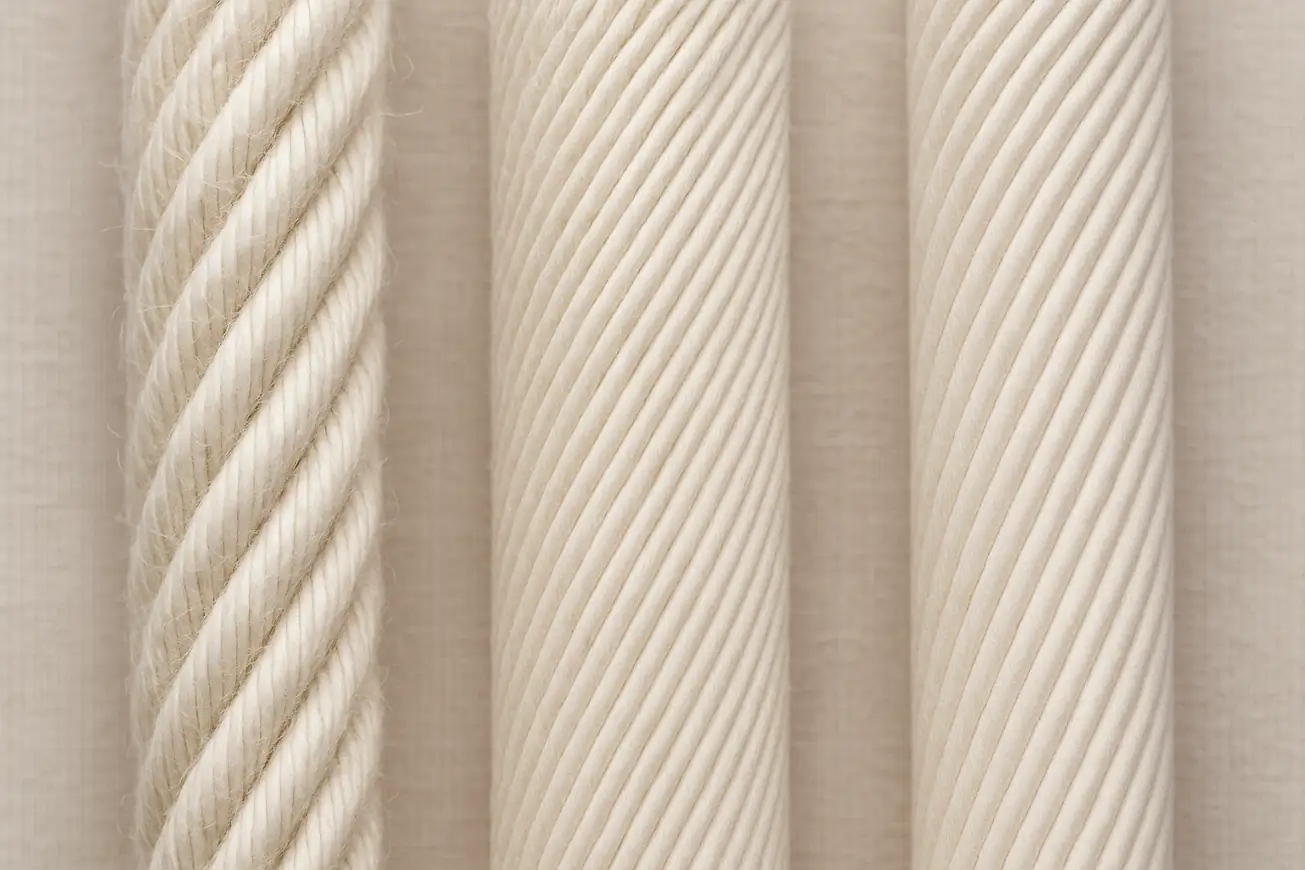
Higher yarn hairiness compared to combed or compact yarn
Good process stability at high volumes
Cost-efficient and widely available
Use in Knitted Garments
Carded cotton yarn is commonly used for:
Entry-level and mid-range knitted garments
Programs where cost efficiency is critical
Higher GSM fabrics where texture is less noticeable
Large-volume production with consistent repeatability
With proper knitting and finishing, carded cotton can still deliver reliable performance in many knitted garment applications.
What Is Combed Cotton Yarn?
Combed cotton yarn goes through an additional fiber refinement process after carding. During combing, short fibers, neps, and remaining impurities are removed, leaving behind longer and more uniform fibers.
This improves yarn consistency but also increases processing time and cost.
Manufacturing Characteristics
Cleaner fiber profile
Reduced yarn hairiness
Improved yarn uniformity
Better surface appearance after knitting
Use in Knitted Garments
Combed cotton yarn is typically selected for:
Mid to premium knitted garments
Products where fabric feel and appearance matter
Solid-dyed garments and minimal-print styles
Programs requiring better pilling resistance
Combed yarns are chosen when brands want improved fabric refinement without moving into higher spinning costs.
What Is Compact Cotton Yarn?
Compact cotton yarn refers to a compact spinning system, not a fiber grade. In compact spinning, fibers are condensed before twist insertion, allowing better fiber integration into the yarn body.
This significantly reduces protruding fibers and improves yarn structure.
Manufacturing Characteristics
Lower yarn hairiness
Improved yarn strength and uniformity
Cleaner fabric surface
Higher spinning and operational cost
Use in Knitted Garments
Compact cotton yarn is generally used for:
Premium and export-focused knitted garments
Lightweight or fine-gauge fabrics
Garments where surface smoothness is critical
Programs targeting long-term fabric appearance
Because of cost and scalability considerations, compact yarns are typically used selectively rather than across all product ranges.
Practical Comparison for Knitted Garments
| Parameter | Carded Cotton | Combed Cotton | Compact Cotton |
|---|---|---|---|
| Fiber Preparation | Basic | Refined | Refined |
| Spinning Method | Conventional | Conventional | Compact spinning |
| Yarn Hairiness | Higher | Reduced | Minimal |
| Yarn Uniformity | Standard | Improved | High |
| Typical Application | Entry / Volume | Mid to Premium | Premium |
| Cost Impact | Economical | Moderate | Higher |
- Fiber Preparation
- Basic
- Spinning Method
- Conventional
- Yarn Hairiness
- Higher
- Yarn Uniformity
- Standard
- Typical Application
- Entry / Volume
- Cost Impact
- Economical
- Fiber Preparation
- Refined
- Spinning Method
- Conventional
- Yarn Hairiness
- Reduced
- Yarn Uniformity
- Improved
- Typical Application
- Mid to Premium
- Cost Impact
- Moderate
- Fiber Preparation
- Refined
- Spinning Method
- Compact spinning
- Yarn Hairiness
- Minimal
- Yarn Uniformity
- High
- Typical Application
- Premium
- Cost Impact
- Higher
This comparison highlights application differences, not quality ranking.
How Yarn Selection Is Actually Done in Manufacturing
In real factory environments, yarn selection for knitted garments is based on a combination of technical and commercial factors, including:
Target market and price positioning
Knit structure and machine gauge
Dyeing or printing method
Order quantity and repeat potential
Export compliance and quality expectations
Manufacturers rarely select yarn based on terminology alone. Instead, they evaluate how the yarn will perform within the complete fabric and garment system.
Common Buyer Misunderstandings
Several misconceptions often arise during yarn discussions:
Assuming compact cotton is required for all export programs
Believing carded cotton cannot meet quality expectations
Treating yarn type as the sole indicator of garment quality
Ignoring the role of finishing, washing, and process control
In knitted garments, final performance is always the result of multiple combined factors, not a single yarn decision.
The Role of Finishing and Processing
It is important to note that yarn selection is only one part of fabric performance. Processes such as:
Pre-shrinking
Bio-washing
Enzyme treatment
Compaction and stentering
play a major role in how knitted garments behave in real-world use.
A well-finished carded yarn fabric can sometimes outperform a poorly processed premium yarn fabric.
Final Thoughts
Carded, combed, and compact cotton yarns each play a defined role in knitted garments manufacturing. None of these options is universally superior. Their suitability depends on product design, price positioning, fabric construction, and end-use requirements.
Understanding these yarn processes helps buyers and sourcing teams communicate more effectively with manufacturers, set realistic expectations, and make informed decisions that balance quality and commercial viability.
At Mirthuni Apparel, yarn selection is approached from a practical manufacturing perspective, ensuring that fabric choices align with real production outcomes, performance expectations, and long-term brand goals.