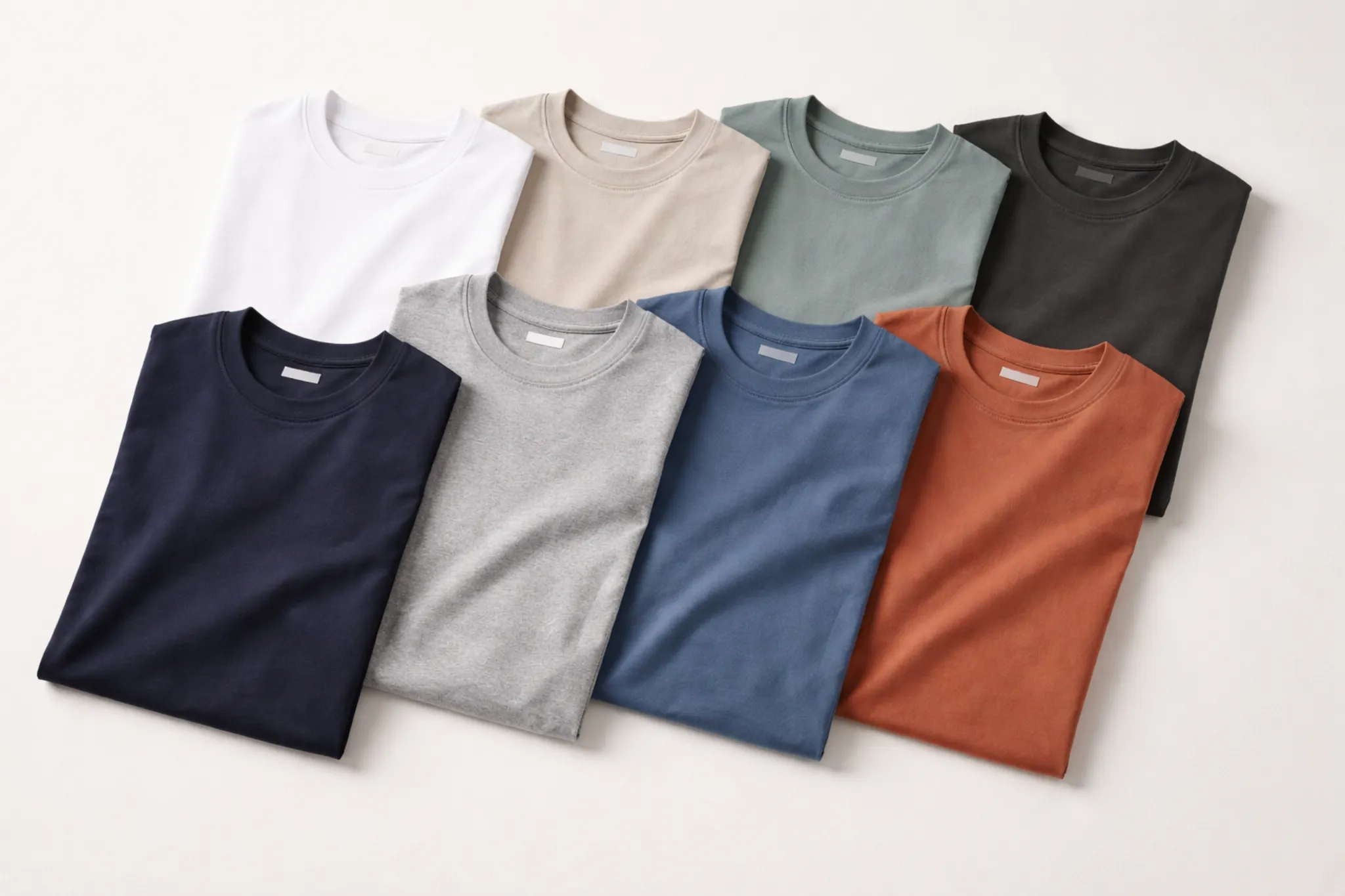
Crew neck T-shirts are one of the most widely produced garments in the global apparel industry. While they appear simple in design, consistent quality at scale depends on careful control over fabric, neckline construction, fit development, and production processes.
For fashion brands sourcing from India, especially from established knitwear clusters like Tiruppur, understanding how these elements work together is essential. This guide explains how crew neck T-shirt manufacturing in India actually works, with practical insights for brands planning private label T-shirt production.
Why Crew Neck T-Shirts Are a Core Product for Fashion Brands
The crew neck T-shirt remains a staple across multiple categories:
- Everyday essentials and basics collections
- Premium streetwear and oversized programs
- Loungewear and sleepwear lines
- Kidswear and uniform segments
For brands, it offers scalability and repeatability. For manufacturers, it requires precision in execution. The key difference between an average product and a high-quality one often comes down to technical details that are not visible at first glance.
Fabric Selection in Crew Neck T-Shirt Manufacturing
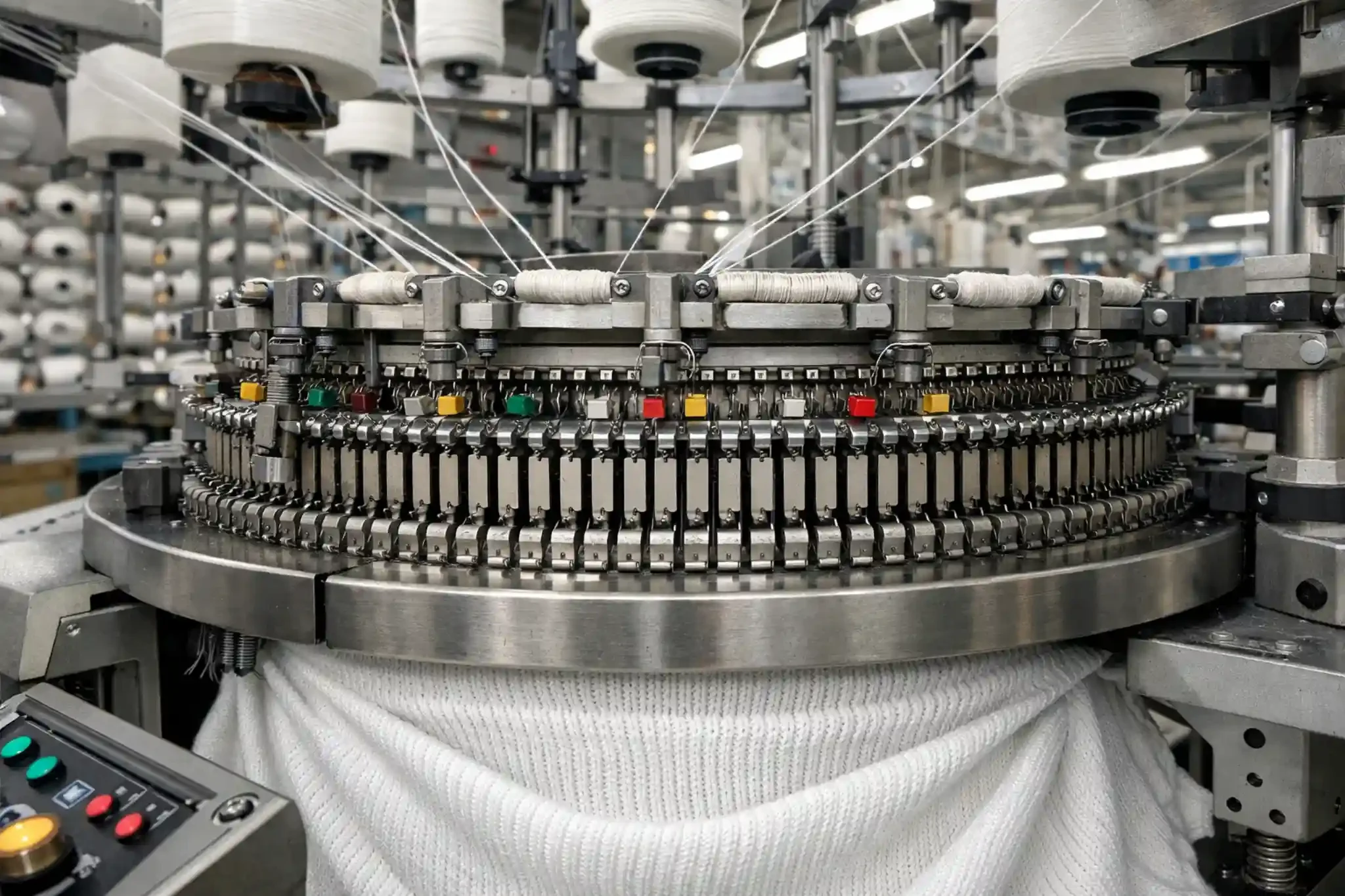
Fabric is the foundation of any crew neck T-shirt manufacturing process. In India, most T-shirts are developed using knitted fabrics, which provide flexibility, comfort, and better drape.
Common Fabric Options
100% Cotton (Carded vs Combed)
- Carded cotton is more economical but has a slightly rougher feel
- Combed cotton removes short fibers, resulting in a smoother and more uniform fabric
Compact Cotton
- Produced using advanced spinning techniques
- Offers improved strength, reduced hairiness, and a cleaner surface finish
- Preferred for premium and export-quality garments
Cotton Lycra Blends
- Usually 95% cotton and 5% elastane
- Provides stretch and better shape retention
- Suitable for fitted silhouettes
Understanding GSM in T-Shirts
GSM in T-shirts refers to fabric weight and directly affects the final product:
- 160 to 180 GSM for lightweight programs
- 180 to 200 GSM for standard retail quality
- 220 to 240 GSM for premium positioning
- 260 GSM and above for heavyweight and oversized styles
Choosing the correct GSM is critical for achieving the intended look, feel, and durability.
Neckline Construction in Crew Neck T-Shirts
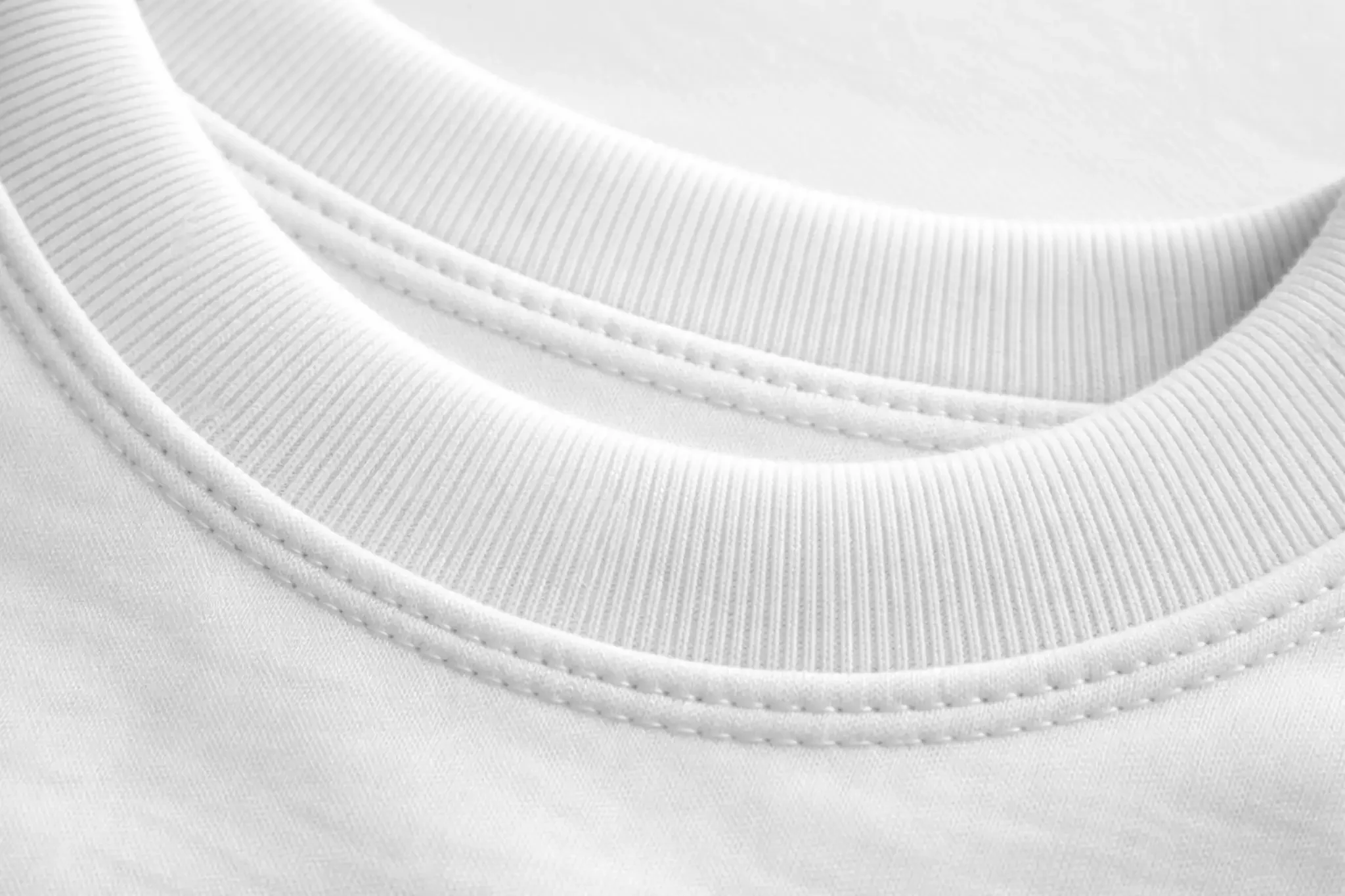
The neckline is the defining feature of a crew neck T-shirt, and it is also where most quality issues occur.
Rib Types Used in Crew Neck T-Shirts
- 1×1 rib for standard elasticity
- 2×1 rib for a thicker and more structured appearance
- Rib with elastane for improved recovery and durability
What Determines Neckline Quality
Several factors influence the performance of the neckline:
- Rib composition and elasticity
- Stitching technique and tension
- Neck binding consistency
- Collar height and proportion
A well-constructed neckline should maintain its shape after repeated washing, sit flat on the body, and provide consistent stretch without distortion.
Fit Development in T-Shirt Manufacturing
Fit is a critical factor in apparel manufacturing in India, especially when producing for international markets.
Common Fit Types
- Regular fit T-shirts for standard retail
- Slim fit T-shirts for a tailored appearance
- Oversized T-shirts for streetwear and relaxed styling
- Boxy fit T-shirts with wider body proportions and shorter length
Why Fit Accuracy Matters
Fit is controlled through:
- Measurement charts and specifications
- Size grading across different sizes
- Fabric behavior such as shrinkage and stretch
Even small deviations can impact how the garment looks and feels. This is why most export programs include multiple sampling stages before bulk production.
Crew Neck T-Shirt Production Process in India
The T-shirt production process in India follows a structured sequence:
1. Feasibility Review
The design is evaluated based on the tech pack or reference sample. Fabric availability and production requirements are analyzed.
2. Fabric Development
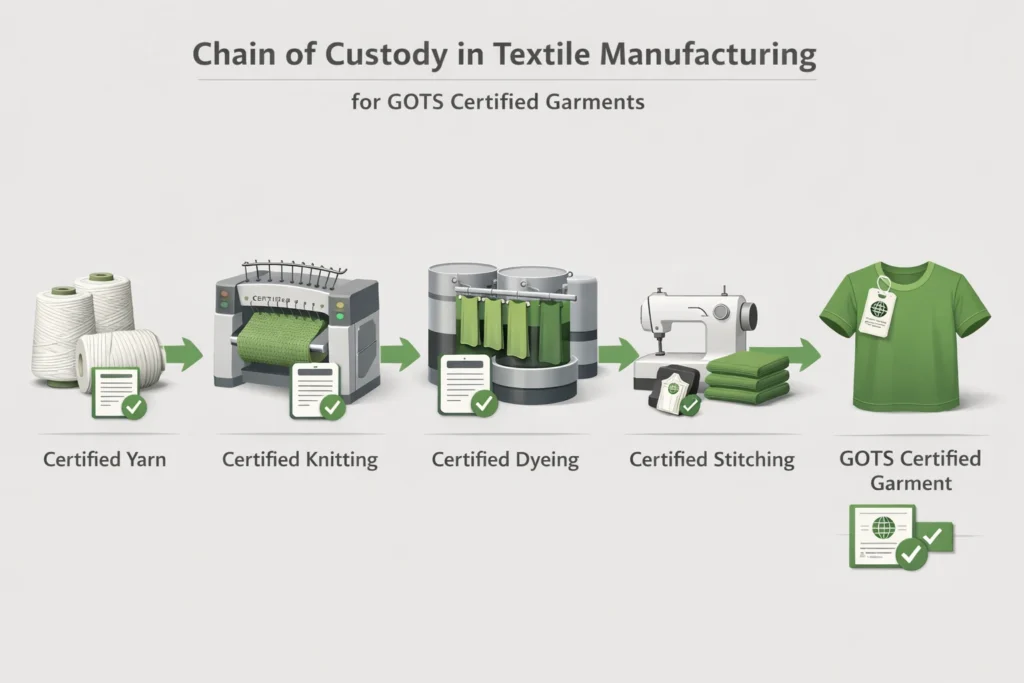
Yarn sourcing, knitting, dyeing, and finishing are completed. This stage defines the final fabric quality.
3. Sampling
Prototype samples are created, followed by fit corrections and pre-production samples. This stage ensures alignment before bulk production.
4. Bulk Production
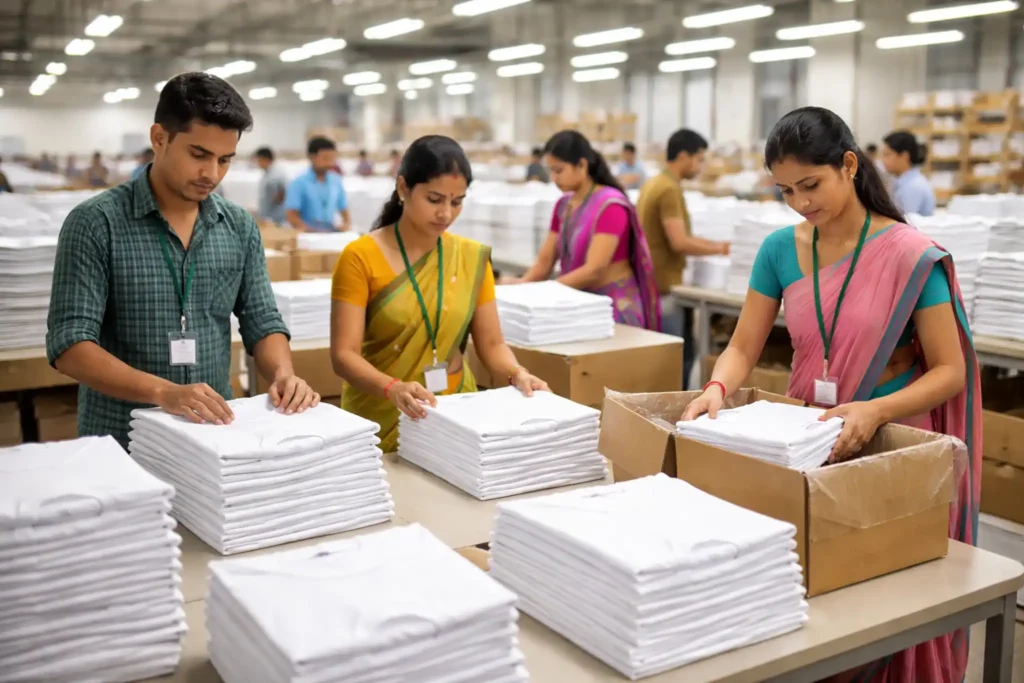
Cutting, stitching, printing, and finishing are carried out under controlled conditions.
5. Quality Control
Inline inspections and final checks ensure consistency and compliance with buyer standards.
6. Shipment
Garments are packed and shipped with complete export documentation, often on FOB terms.
Common Issues in Crew Neck T-Shirt Manufacturing
Even simple garments can face production challenges if not managed correctly.
Neckline Stretching
Caused by poor rib quality or incorrect stitching. Using elastane blends in rib helps maintain shape.
Fabric Shrinkage
Occurs when fabric is not properly processed. Pre-shrinking and compacting reduce this risk.
GSM Variation
Differences between expected and actual fabric weight. Lab testing and approvals are necessary before production.
Fit Inconsistency
Variations in size during bulk production. Strict measurement control and inspection are required.
Printing and Private Label Customization
Private label T-shirt manufacturing includes various customization options:
Printing Methods
- Screen printing for bulk efficiency
- Puff printing for textured designs
- Discharge printing for soft hand feel
- Digital printing for complex graphics
Branding Elements
- Neck labels and main labels
- Hangtags
- Custom packaging
- Care labels and size indicators
These elements contribute to brand identity and product positioning.
MOQ in T-Shirt Manufacturing in India
MOQ in T-shirt manufacturing depends on fabric and production requirements.
Typical MOQ:
- Around 300 pieces per color
Fabric development often requires minimum quantities at the mill level, which directly affects order planning and costing.
Production Timelines
Realistic timelines for T-shirt manufacturing in India are:
- Sampling stage: 2 to 3 weeks
- Bulk production: 45 to 60 days
- Shipping: Based on destination and logistics
Accurate planning is essential to avoid delays and maintain quality.
Why India Is a Key Hub for T-Shirt Manufacturing
India, particularly Tiruppur, offers a strong ecosystem for apparel manufacturing:
- Integrated production from yarn to finished garment
- Skilled workforce with export experience
- Strong network of compliant factories
- Capability to handle private label programs
This makes India a reliable option for brands looking for scalable and consistent production.



Conclusion
Crew neck T-shirts manufacturing in India requires more than basic stitching. It involves precise control over fabric selection, neckline construction, fit development, and production execution.
Brands that understand these factors early can avoid common mistakes and achieve consistent product quality across orders.
Planning to Develop Crew Neck T-Shirts for Your Brand
If you are considering private label crew neck T-shirt production, the first step is to define your requirements clearly.
You can share:
- Tech packs or reference designs
- Fabric preferences and GSM
- Quantity and color breakdown
A proper feasibility review helps ensure accurate costing, sampling, and production planning.