Most people wear t shirts every day but only a few know how they are actually made. In Tiruppur the knitwear capital of India the manufacturing process works like a coordinated system. Yarn mills, dye houses, printing units, cutting rooms, sewing lines and finishing floors come together to turn raw fibre into branded apparel sold across the world.
This article gives you a ground level view of how t shirts are made in Tiruppur. It is written with real factory insight and not generic textbook information. If you are a clothing brand or plan to manufacture private label garments this is for you.
Step 1: Cotton & Yarn - The Foundation of Every Good T-Shirt
The journey begins with cotton.
Cotton is sourced from Tamil Nadu, Maharashtra and Gujarat and sent to spinning mills. Yarn quality decides how your t shirt will feel on the skin so mills have a strict refinement process.
Inside a spinning unit
Cotton is cleaned, blended, combed and carded
Short fibres and dust are removed
Compact spinning improves strength and smoothness
Yarn is wound into cones for knitting
Popular yarn counts for t shirts
20s, 24s, 26s, 30s, 32s, 40s compact combed cotton.
Higher the count finer the yarn and better the fabric feel.
For sustainability focused brands Tiruppur also supports
GOTS organic cotton
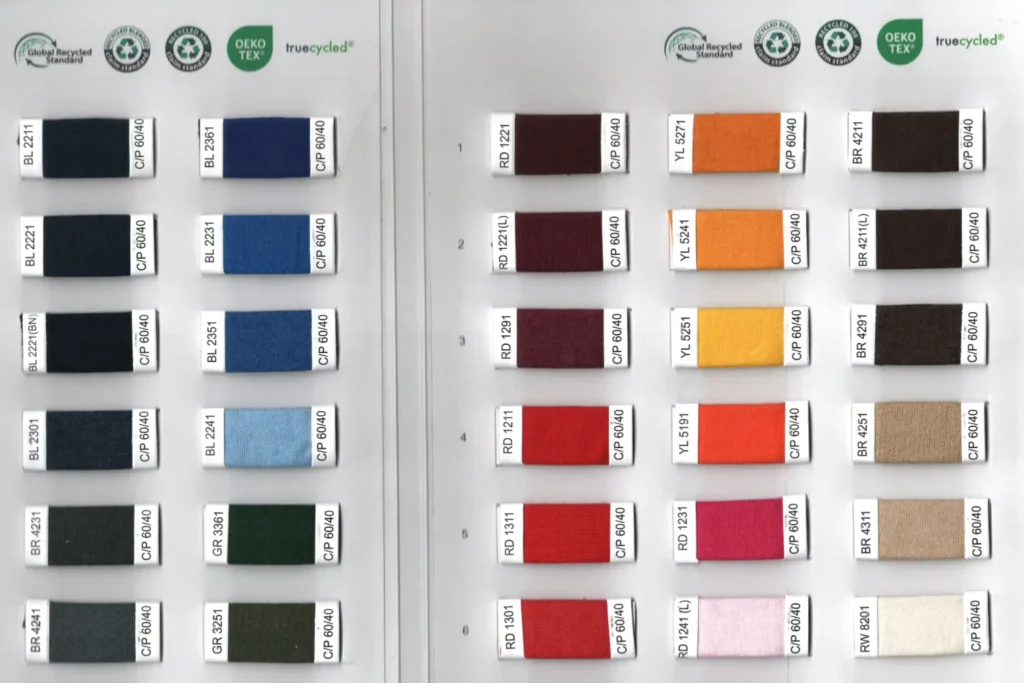
GRS recycled cotton and polyester
BCI cotton
Step 2: Knitting - Where Yarn Becomes Fabric
The yarn cones move to circular knitting machines. Hundreds of needles interlock loops at high speed to create greige fabric rolls.
Most used knit structures
| Knit Type | Best For |
|---|---|
| Single Jersey | Standard tees and graphics |
| Interlock | Premium smooth finish |
| Pique | Polo t shirts |
| Rib | Necks and cuffs |
A good knitting unit maintains loop length, tension and machine gauge. Even a small variation can change stretch recovery or GSM.
Step 3: Dyeing & Finishing - The Science Behind Shade & Feel
Tiruppur is famous for its dyeing finish. This is where color, shrinkage control and softness are engineered.
Typical dyeing sequence
Pre treatment and bleaching
Pressure dyeing with controlled shade recipe
Enzyme or bio wash removal of surface fuzz
Compaction to achieve controlled shrinkage
Softener finish for hand feel
Optional finishes like antimicrobial, hydrophobic, UPF
GSM grades for t shirts
| GSM | Use |
|---|---|
| 160 to 180 | Summer lightweight tees |
| 180 to 200 | Premium basics |
| 220 to 260 | Oversized and streetwear |
Better finishing gives better fabric stability and wash durability.
Step 4: Fabric Inspection - Reject Early, Ship Better
Before cutting every fabric roll is inspected using the 4 Point System.
This step filters defects early which avoids rejection later.
Inspection checklist
Holes, slubs and knitting lines
GSM variation
Shade consistency across rolls
Stretch and spirality
Pilling resistance and surface smoothness
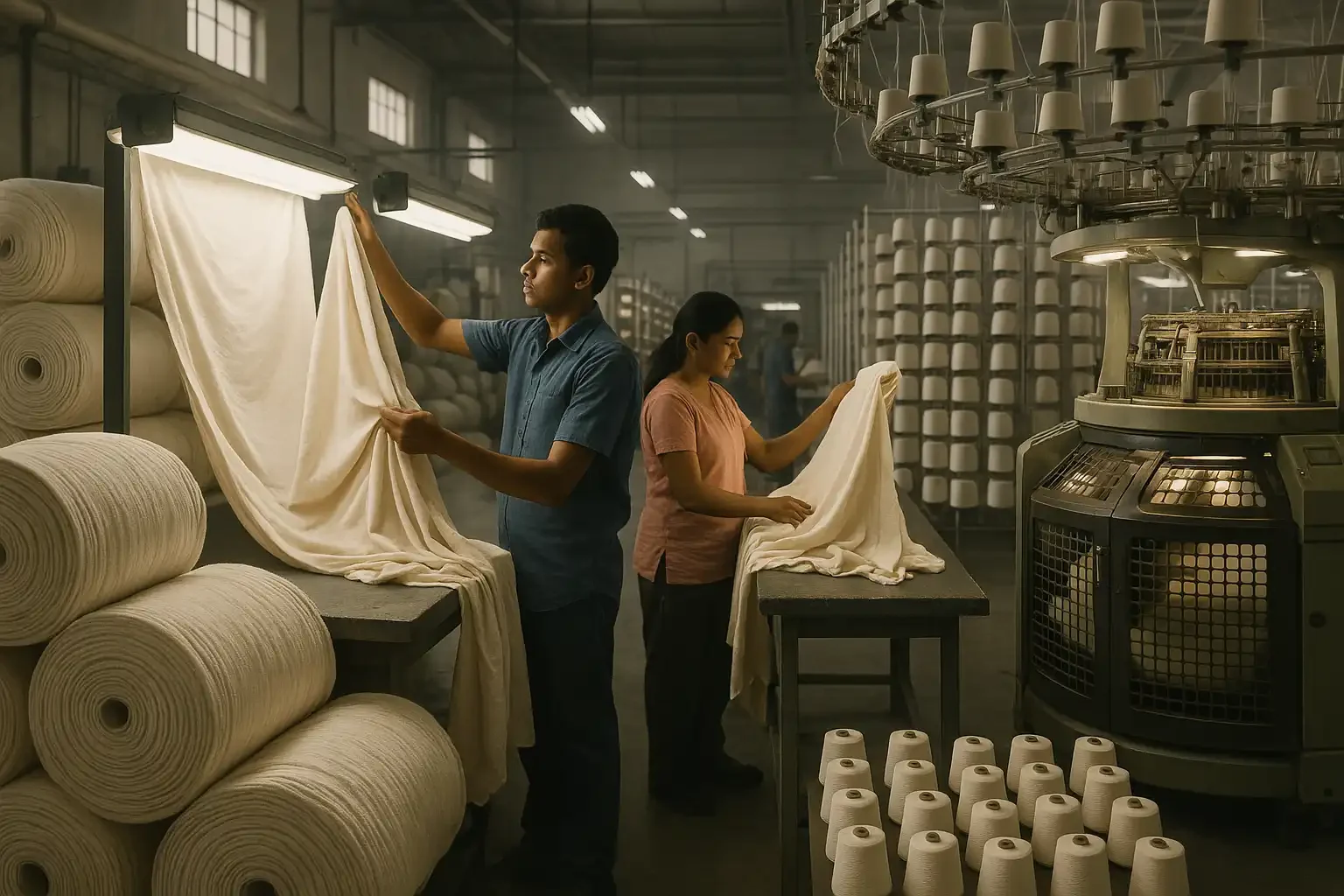
Step 5: Cutting - The Blueprint Stage
Patterns are graded for all sizes as per techpack.
Fabric is layer stacked, tension removed and then cut using straight knife, CNC or die cutting machines.
Parts of a basic t shirt
Front panel
Back panel
Sleeves
Rib neck
Reinforcement tape or pockets if needed
Precision is key. Even a 2 millimeter error here can reflect in sleeve twist or uneven side seams later.
For a complete understanding of T-shirt manufacturing in India, including fabrics, fits, and export capabilities, explore our main guide: T-shirt Manufacturing India – Full Overview.
Step 6: Printing & Embellishment - Identity of the Garment
Before stitching prints or embroidery are added. Tiruppur is well known for its printing capacity and finishing clarity.
Available decoration methods
| Method | Suitable For |
|---|---|
| Screen Print | Retail graphics and branding |
| DTF | Complex multi color graphics |
| Puff Print | Streetwear depth effect |
| Silicone Rubber Print | Athletics and branding gloss |
| Embroidery | Premium branding |
| Sublimation | AOP and polyester tees |
Good printwork depends on correct curing temperature, stroke thickness and ink fastness.
Step 7: Stitching - Production Floor Where Everything Joins
Cut and printed panels move to the stitching floor.
Operators follow a sequence like shoulder join, neck binding, sleeve attach, side seam, hemming and label attachment.
Key machines used
Overlock four or five thread for body join
Flatlock for active seams
Coverstitch for hems
Bartack for reinforcement
Rib attaching machines for collars
A premium t shirt may involve ten to twenty two sewing operations depending on design.
For brands developing their own designs, working with a private label garment manufacturing partner in India ensures that stitching standards, construction details, and measurements are executed exactly as specified across sampling and bulk production.
Step 8: Quality Control - The Step Many Buyers Underestimate
QC happens throughout production and not only at the end.
Inspection points
Measurement tolerance within plus or minus half a centimeter
Print or embroidery alignment
Stitch density and seam strength
Shrinkage after test wash
Colorfastness in rub and perspiration test
Defective garments are reworked or replaced.
Step 9: Finishing, Ironing & Packaging
Once garments pass QC they move to finishing.
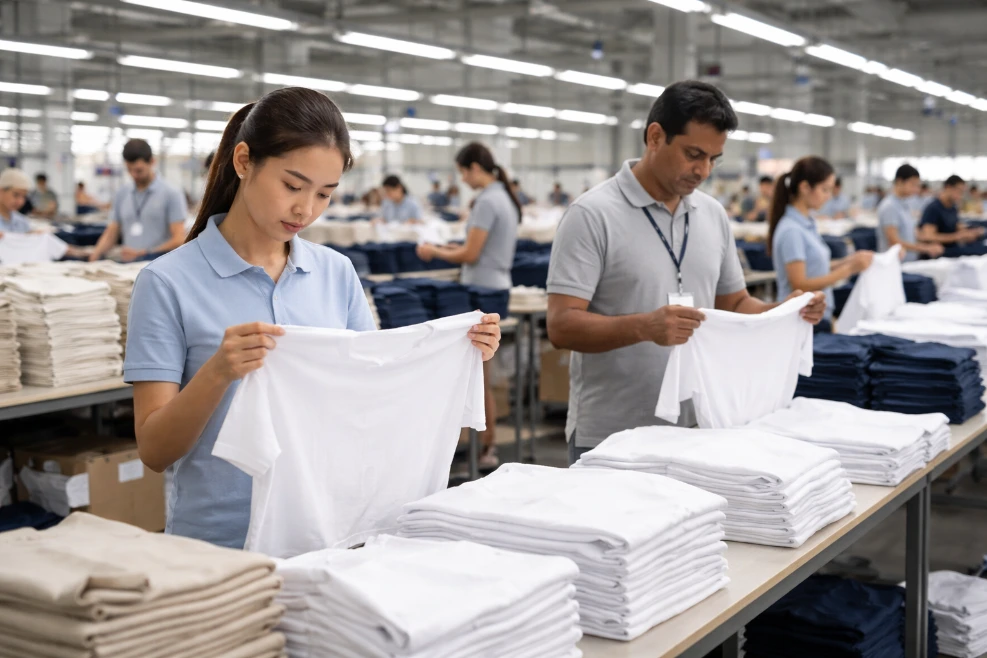
Threads are trimmed labels are fixed garments are steam ironed and then folded.
Available packaging styles
Individual polybag or eco friendly bag
Branding tag and barcode
Packed size wise or color wise
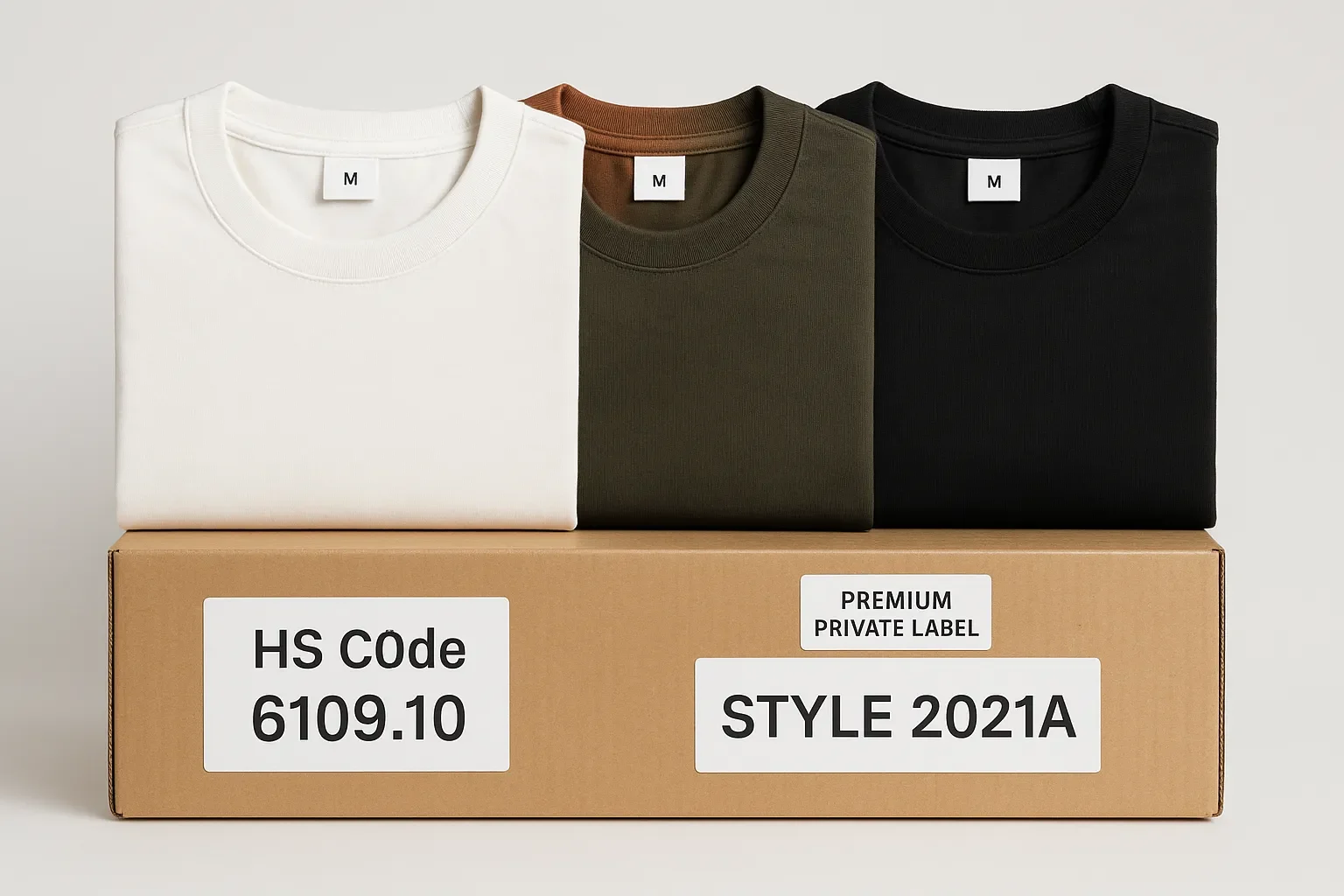
Master carton with HS code 6109
Export shipment compliant markings
Cartons move to Chennai or Tuticorin port or air cargo.
Why Global Brands Choose Tiruppur for T-Shirt Manufacturing
| Advantage | Benefit |
|---|---|
| Vertically integrated supply chain | Yarn to packing within short radius |
| Skilled workforce | Fast throughput and fewer defects |
| Export grade QC systems | Matches international standards |
| Sustainable options | Organic and recycled production |
| Short lead times | Sampling can start within one to two weeks |
Tiruppur is one of the most complete apparel hubs in the world where the entire process can be executed without outsourcing to other cities.
Final Takeaway
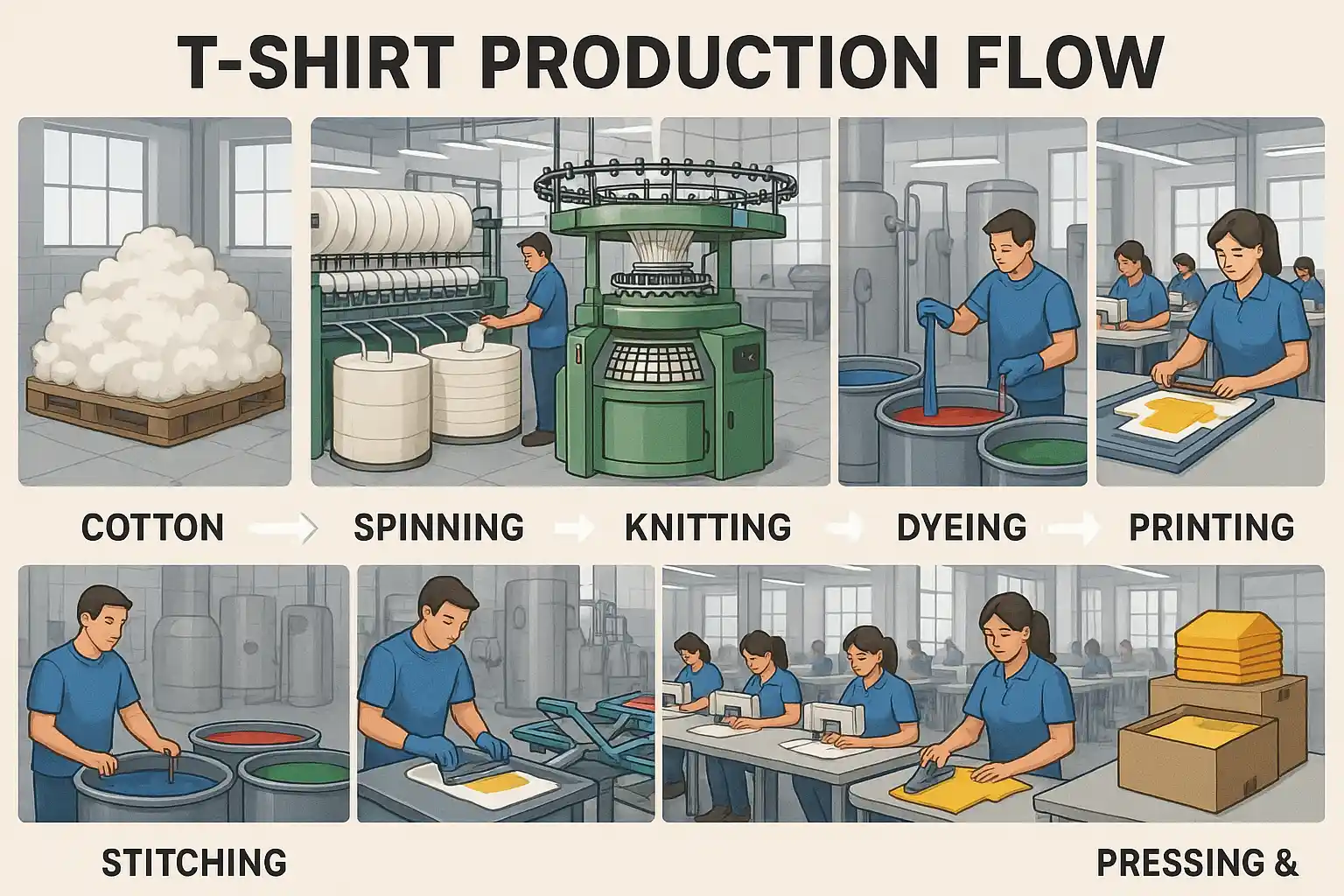
Making a t shirt looks simple but the process involves yarn, knitting, dyeing, cutting, printing, sewing, finishing and quality checks. Tiruppur offers all these stages inside one industrial ecosystem which makes it fast, efficient and reliable for startup brands and global labels.
If you want to launch your own t shirt line Tiruppur is one of the strongest sourcing destinations for both quality and scalability.
Start Your T Shirt Program With Us
We help brands develop t shirts with the right fit, fabric and print finish.