Private label apparel manufacturing is often misunderstood as a flexible or design-led service. In reality, it is a production-driven discipline that operates within clearly defined specifications, approvals, and execution boundaries.
For global brands and buyers sourcing garments at scale, the transition from a finalized tech pack to bulk production is where most risks emerge-cost overruns, timeline delays, quality inconsistencies, and compliance issues. These problems are rarely caused by factories alone; they are usually the result of unclear inputs, undefined responsibilities, or missing approvals.
This article explains how structured private label manufacturing works in practice, outlining each stage from tech pack review to bulk production and shipment. The goal is to help brands understand what a reliable manufacturing partner expects and how disciplined workflows protect both sides during execution.
What Private Label Manufacturing Means in Real Production Terms
Private label manufacturing begins after product decisions are complete, not during ideation. Once a brand decides to manufacture under its own label, the manufacturer’s role is to execute approved specifications consistently at scale, not to co-create concepts or experiment with evolving designs.
In a structured private label model:
Product specifications are finalized before costing
Buyer and manufacturer responsibilities are clearly defined
Production moves forward only through documented approvals
Manufacturing follows repeatable systems rather than ad-hoc decisions
This distinction is critical for global buyers. Manufacturers who operate without structured approval systems may appear flexible initially, but often struggle to maintain consistency across bulk orders, seasons, or markets.
Step 1: Tech Pack Review and Production Feasibility
The tech pack is the foundation of any private label manufacturing program. Before any sampling or costing begins, a thorough review is conducted to assess production feasibility.
At this stage, manufacturers typically evaluate:
Construction details and stitching methods
Measurement charts and grading logic
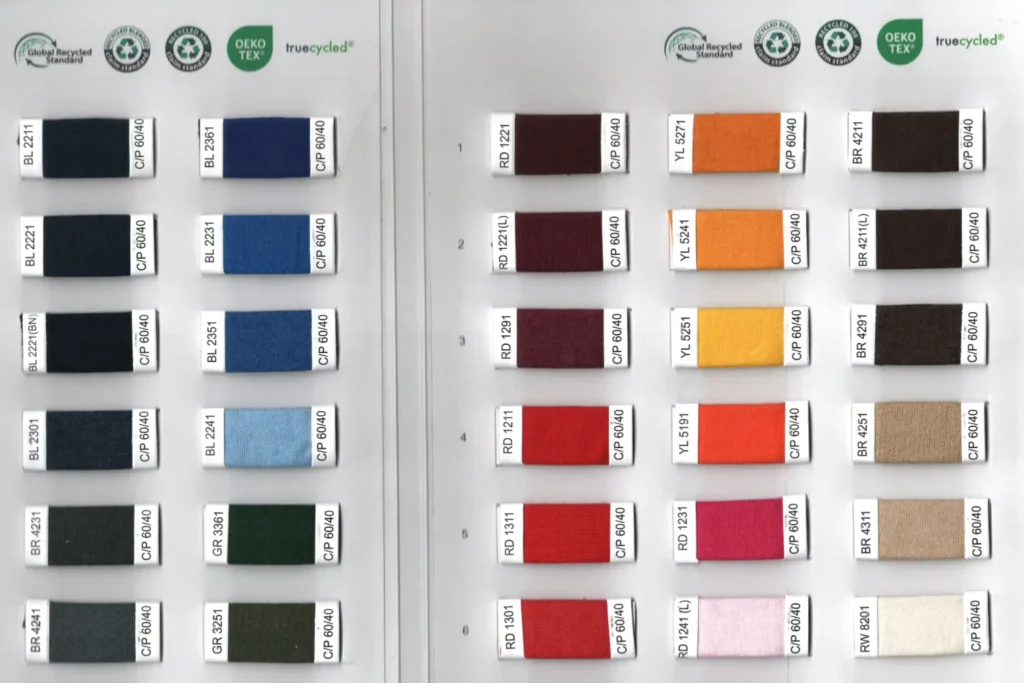
Fabric type, composition, and GSM range
Print, embroidery, or embellishment specifications
Quantity commitments, colour splits, and delivery timelines
This review determines whether the product can be manufactured reliably and repeatedly under real factory conditions. Incomplete or evolving tech packs often result in inaccurate costing and unstable timelines, which later impact bulk production.
Step 2: Fabric and Trim Finalisation Before Sampling
Fabric selection is one of the most technically sensitive stages in apparel manufacturing. Decisions made here directly influence cost, durability, fit, and consistency in bulk production.
Before sampling begins, manufacturers align on:
Fabric composition and yarn characteristics
Knitting or weaving structure
Dyeing and finishing processes
GSM tolerances and shrinkage parameters
Trim and accessory compatibility
Finalising these parameters early prevents changes during later stages, where even small adjustments can disrupt bulk production schedules or increase wastage.
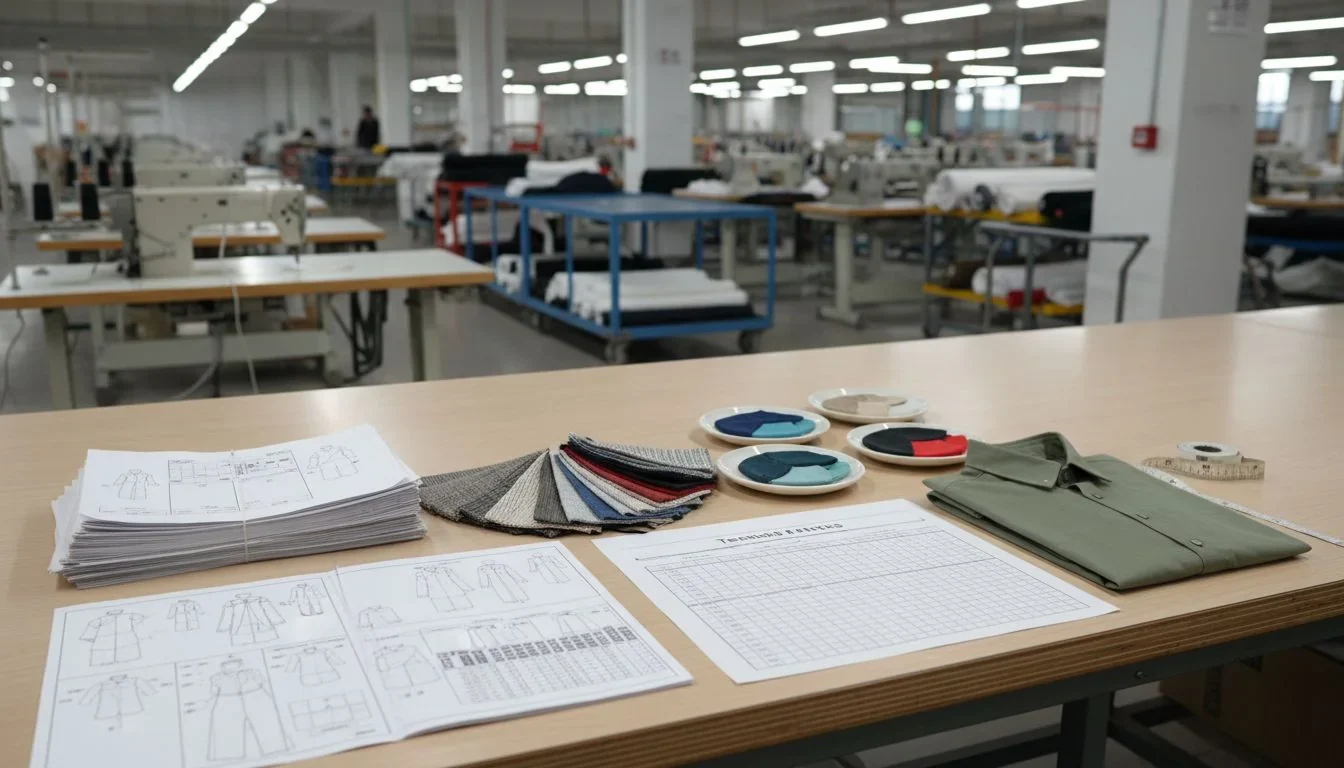
Step 3: Sample Development as a Validation Process
In structured private label manufacturing, sampling is not an exploratory exercise. It serves as a validation step, confirming that approved specifications translate accurately into a physical garment.
Samples are developed strictly according to:
Finalized tech packs
Approved fabrics and trims
Locked construction and measurement details
This allows brands to review fit, construction accuracy, and finish before bulk production. Sampling without finalized inputs often leads to repeated revisions, which delay production and increase costs without improving outcomes.
Step 4: Pre-Production Approval (PPA)
Pre-production approval is the most critical control point in private label manufacturing. It marks the transition from development into execution.
During this stage:
Sample approvals are formally documented
Fabric, sizing, and construction parameters are locked
Production quantities and timelines are confirmed
No further changes are permitted without cost or schedule impact
This step protects both the buyer and the manufacturer by eliminating ambiguity before bulk manufacturing begins.
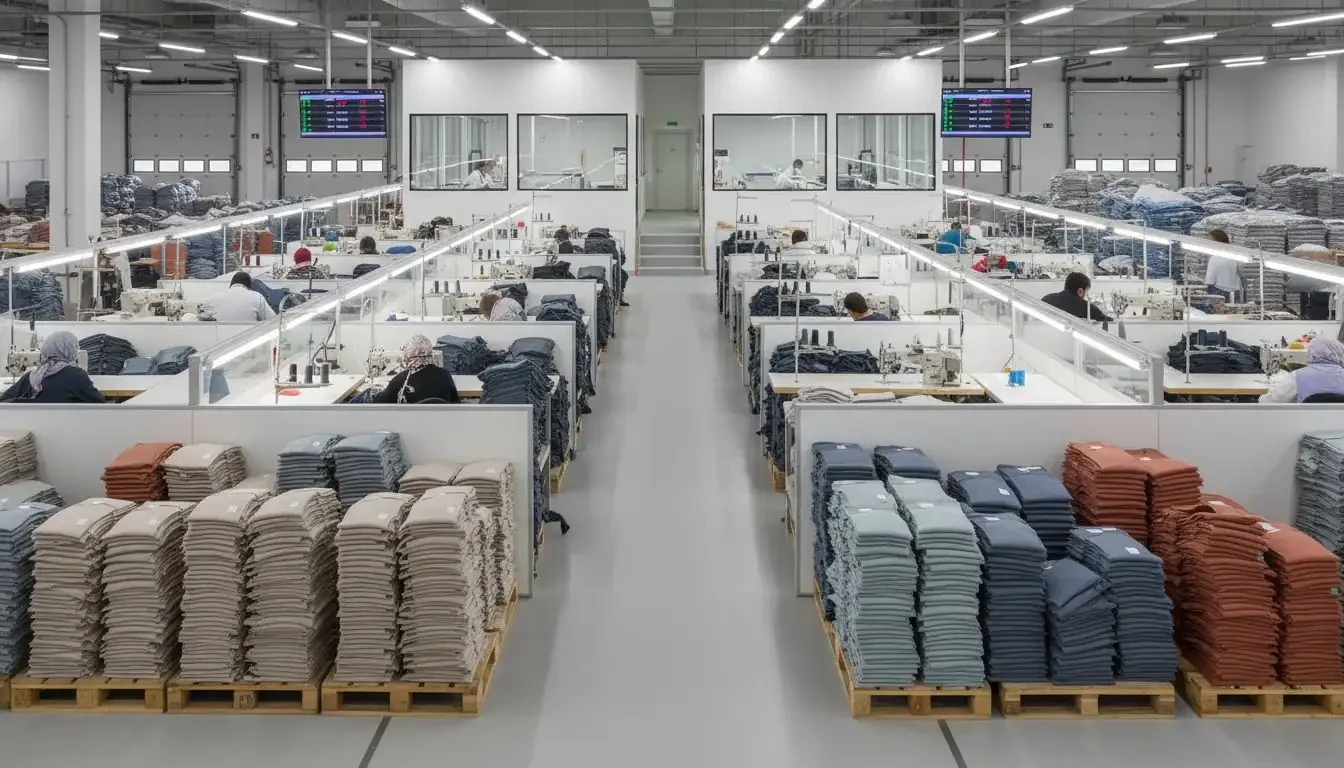
Step 5: Bulk Manufacturing Under Controlled Workflows
Once approvals are completed, bulk manufacturing proceeds under defined production workflows. This is where structured systems make the biggest difference.
Key elements of controlled bulk production include:
Planned capacity allocation and line loading
Process-based monitoring rather than reactive corrections
Consistent execution across sizes, colours, and quantities
Documentation of deviations and corrective actions
For global brands operating across multiple seasons or markets, these controls ensure consistency across repeat orders rather than treating each production run as a standalone project.
Step 6: Quality Inspection and Export-Ready Finishing
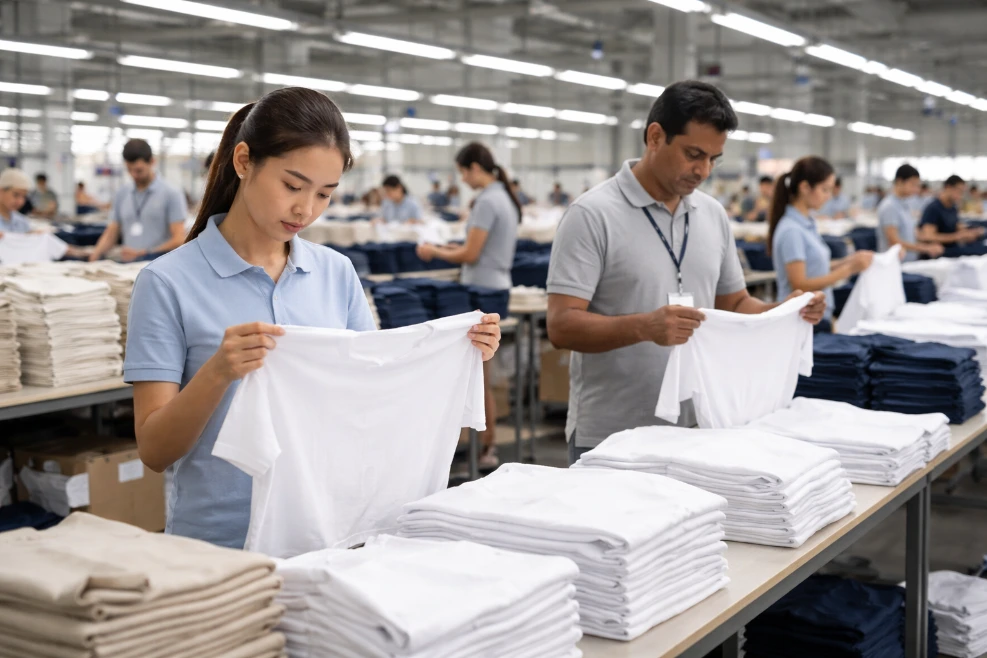
Quality control in professional private label manufacturing is integrated throughout production, not limited to final checks.
Standard practices include:
Inline inspections during key production stages
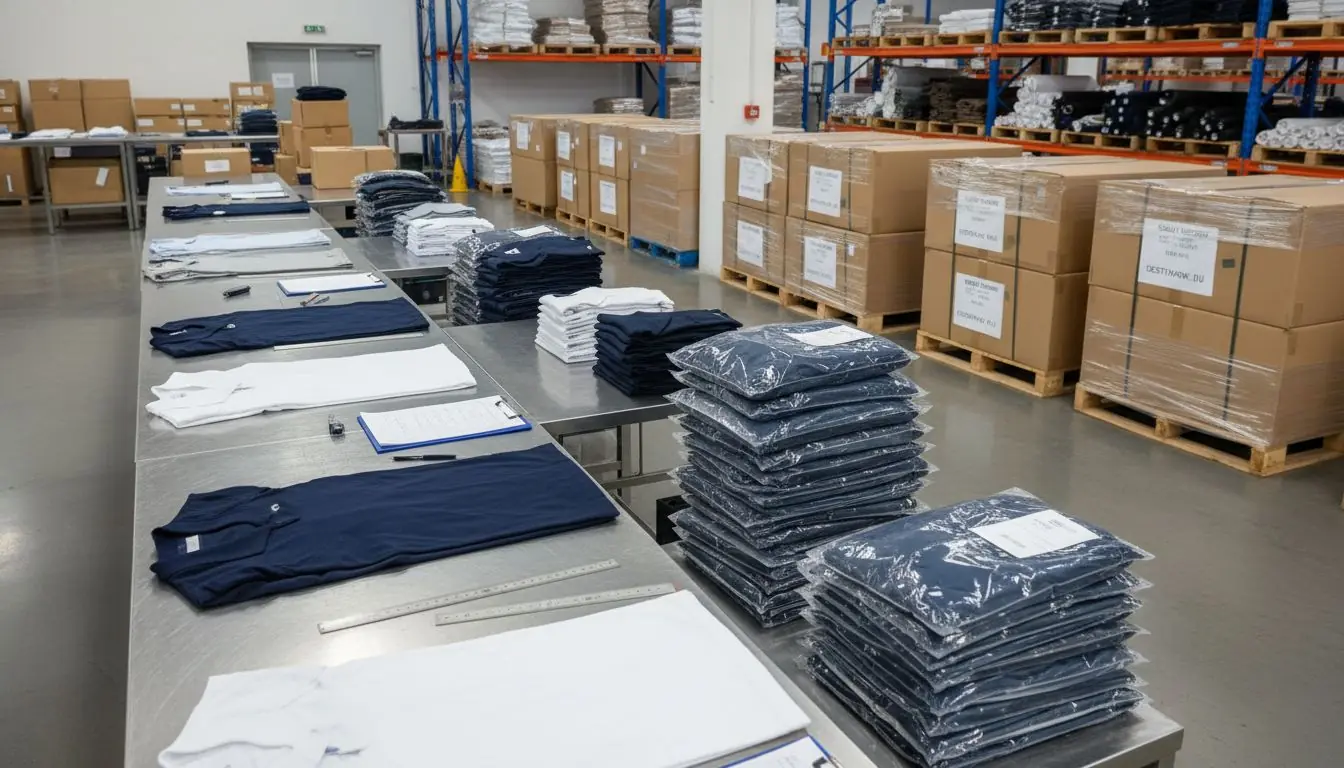
Final inspections prior to packing and dispatch
Verification against approved samples and specifications
Export-ready finishing and packing suitable for international shipment
For international buyers, especially those supplying regulated markets, inspection protocols are essential to minimize rejections, returns, and compliance risks.
Why Structured Manufacturing Matters for Global Brands
Approval-based private label manufacturing is designed to reduce uncertainty. By enforcing discipline at each stage, manufacturers can deliver:
Predictable timelines
Consistent product quality
Scalable production capacity
Reduced risk across repeat orders
Brands that view manufacturing as a system rather than a transactional service are better positioned for long-term growth, particularly in export markets where reliability and compliance are non-negotiable.
Is Your Brand Ready for Bulk Private Label Production?
Private label manufacturing works best when brands are production-ready. This typically means:
Designs and constructions are finalized
Quantities and delivery timelines are confirmed
Tech packs are complete and accurate
Decision-making authority is clearly defined
For brands still in the concept or experimentation stage, development-focused services may be more appropriate than structured manufacturing programs. Understanding this distinction helps avoid misalignment and protects both parties during execution.
Closing Perspective
From tech pack review to bulk production, private label manufacturing is a process of control, not creativity. Each stage exists to protect quality, timelines, and commercial viability at scale.
For global brands and buyers, working with manufacturers who follow structured, approval-based workflows is not about rigidity-it is about reducing risk and building consistency across long-term production programs.