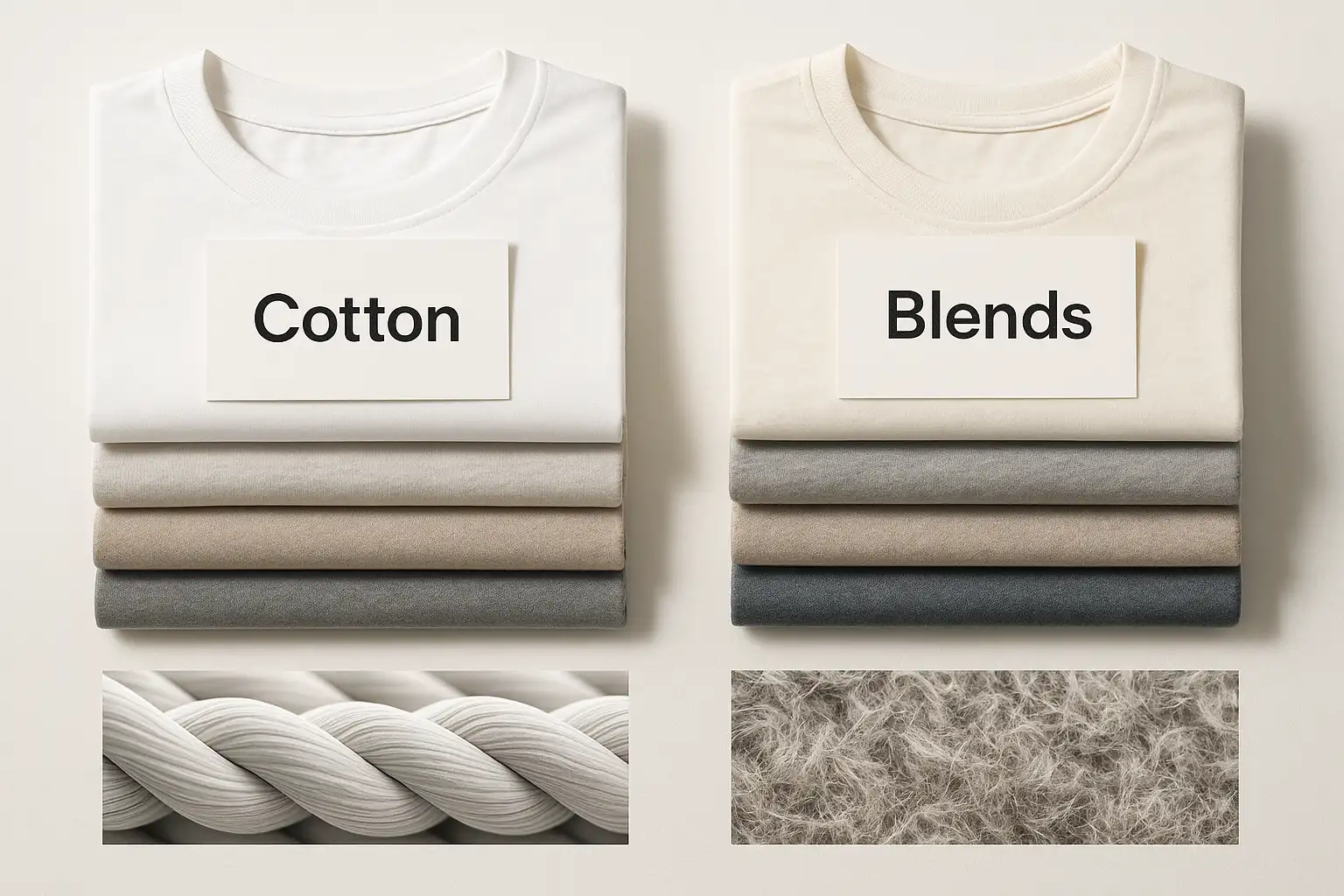
Cotton vs Blends: Why This Fabric Choice Matters
Cotton vs Blends is one of the most important decisions global apparel buyers must make when sourcing T-shirts. The fabric you choose directly influences comfort, durability, print performance, and your product’s long-term commercial success. For retailers, wholesalers, corporate distributors, and private-label brands, the right choice can improve customer satisfaction, reduce returns, and ensure consistency across large-scale programs.
At Mirthuni Apparel, we work with global buyers across the USA, UK, EU, Australia, Middle East, and Latin America to help them select fabrics that match their climate, market expectations, and print requirements. This guide gives a clear, practical comparison backed by real sourcing experience.
Understanding 100 Percent Cotton
Cotton is the preferred option for mid to premium T-shirt programs because it feels natural, breathes well, and works beautifully with most printing techniques. Buyers choose cotton when they want a soft hand feel, a premium impression, and high customer acceptance.
Short advantages of cotton:
- Natural softness and breathability
- Strong print clarity for screen print, water-based inks, puff, and DTG
- Excellent retail perception
- Ideal for heavy GSM streetwear and premium basics
Cotton requires proper compacting to control shrinkage and takes slightly longer to dry, but these factors are well managed by experienced mills. For markets like the USA, Australia, UK, and Germany, cotton remains the first choice for high-quality T-shirt lines.
Cotton Blends combine natural comfort with engineered performance. When cotton is mixed with polyester, viscose, or elastane, the result is a fabric that is more stable, more durable, and easier to maintain.
Short advantages of blends:
- Better shape retention for long-term use
- Faster drying in humid climates
- Reduced shrinkage and fewer size variations
- Great for uniforms, promotional wear, and large bulk orders
- Cost-efficient for international mass production
Blends may not offer the same breathability as pure cotton, but they deliver superior consistency and durability, which is why global uniform suppliers, corporate buyers, and bulk distributors prefer them.
Cotton vs Blends: Which Is Right for Your Market?
Choose Cotton when:
• Your target customers expect premium comfort
• You are producing graphic tees, lifestyle wear, streetwear, or kidswear
• Your market prefers natural fibers
• Print quality is a major selling point
Choose Blends when:
• You are supplying uniforms or corporate apparel
• Durability and easy maintenance are top priorities
• Your program involves frequent washing and long-term use
• You want more cost stability in large-scale distribution
Regional Buying Patterns
- USA and Australia favor premium cotton for retail.
- UK and EU balance cotton and low-poly blends depending on sustainability guidelines.
- Middle East, South Asia, and Africa lean toward blends for hot, humid conditions.
- Corporate and promotional buyers worldwide prefer blends for consistency and durability.
How Mirthuni Apparel Guides Global Buyers
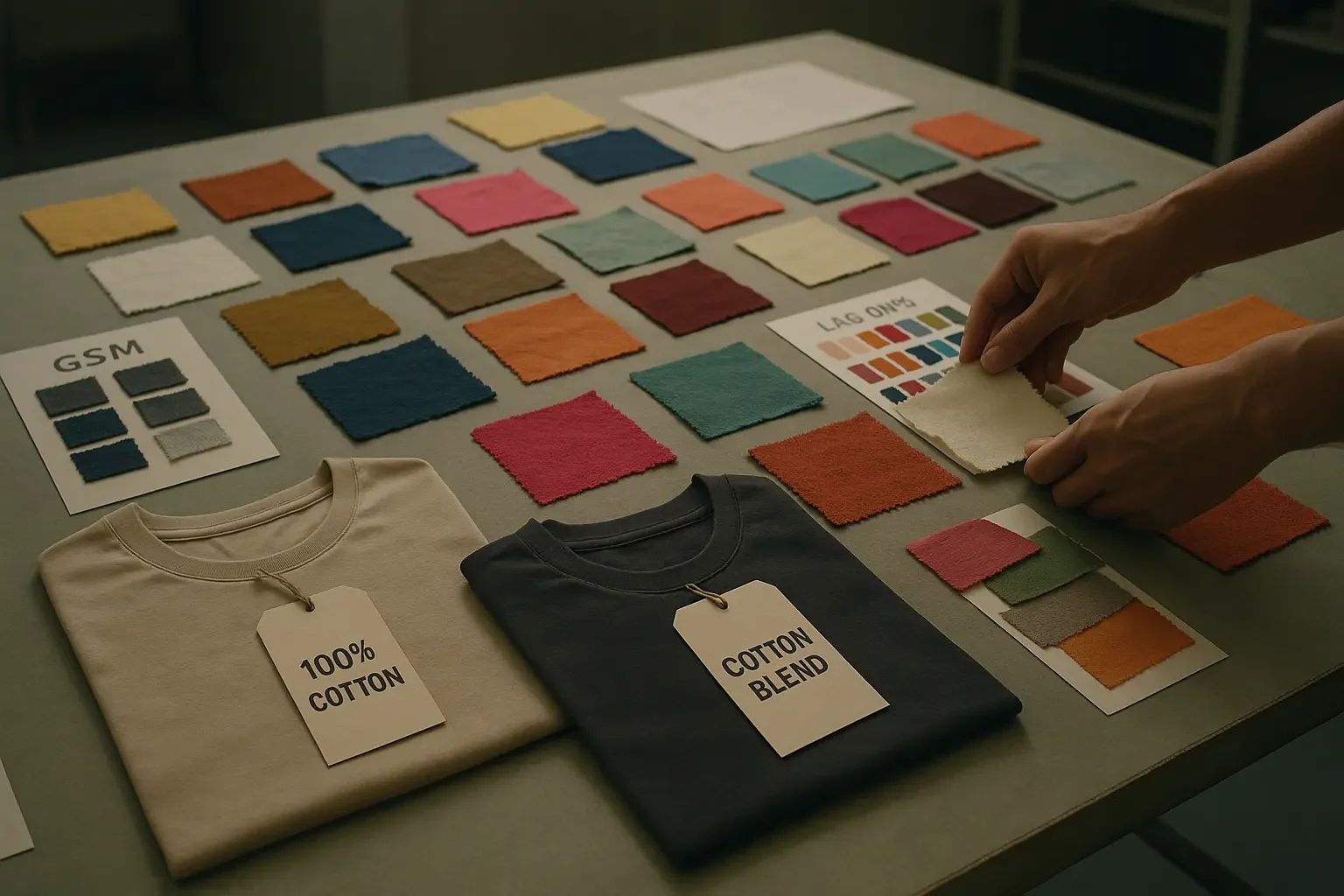
Our sourcing team studies your tech pack, target country, print method, and budget before recommending the ideal fabric. We work closely with audited mills in Tiruppur to ensure GSM accuracy, shrinkage control, colorfastness, and print compatibility.
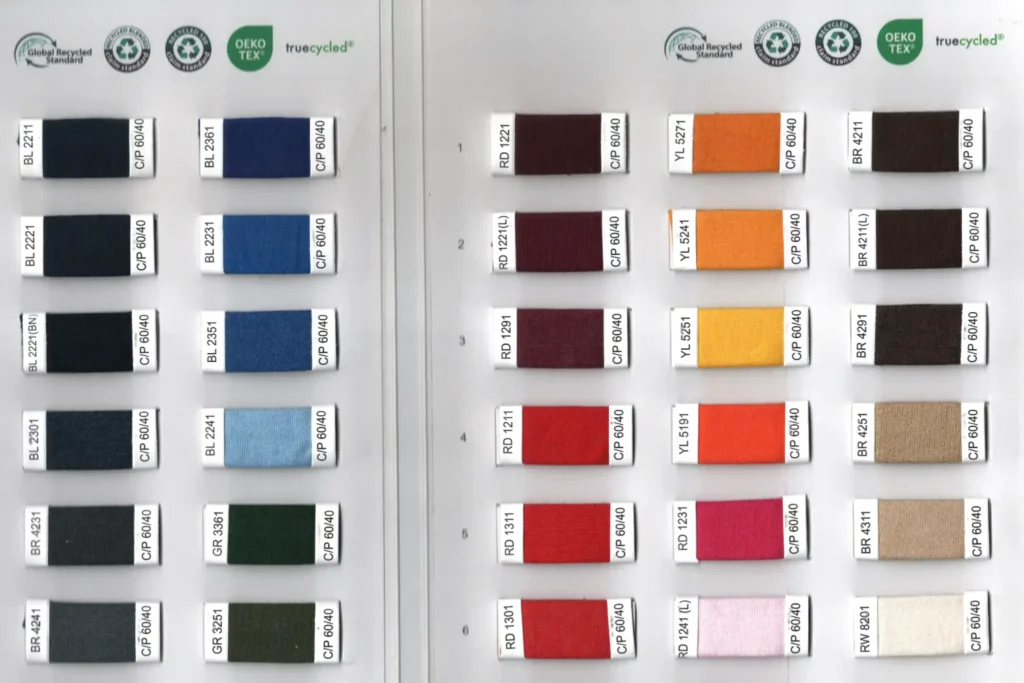
You receive swatches, test reports, and fully verified fabrics before sampling. This guarantees consistency from the first order to every repeat cycle.
Conclusion
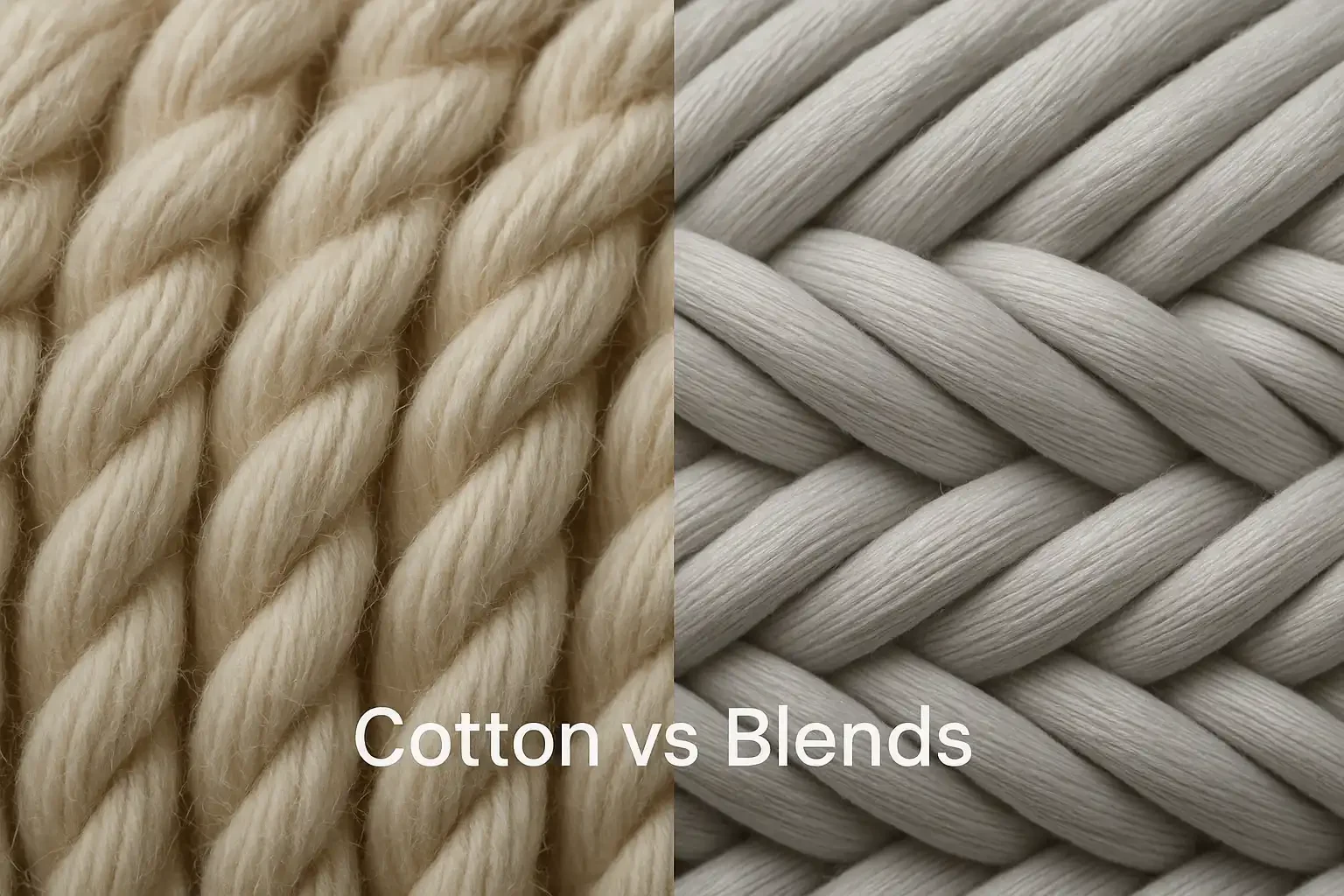
Cotton vs Blends is not about choosing a winner. It is about choosing what works for your market, your climate zone, and your customer expectations. Cotton delivers comfort and premium positioning. Blends deliver durability and performance at scale.
If you want a tailored fabric recommendation for your next T-shirt program, Mirthuni Apparel Sourcing Service can prepare a curated set of options based on your market and design requirements.