French Terry vs Fleece Hoodies for Private Label Manufacturing
Choosing between French terry and fleece is not a styling preference. It is a manufacturing architecture decision that affects garment stability, warmth, shrinkage behavior, pilling risk, cost structure, and long-term brand perception.
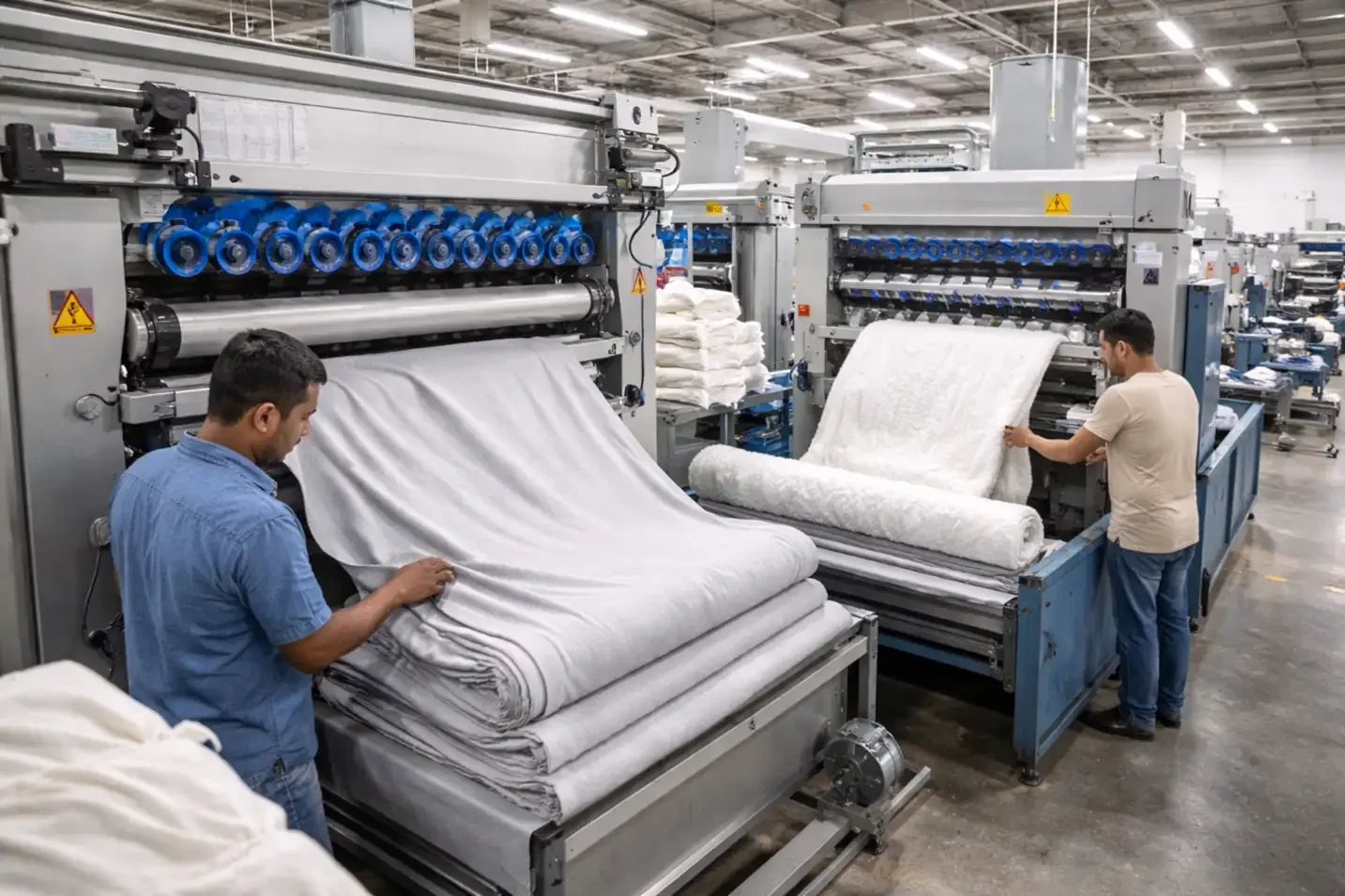
Although both fabrics appear similar on finished hoodies, they follow two completely different engineering and finishing routes in Tiruppur knitwear factories. This is why experienced manufacturers treat French terry and fleece as separate production programs rather than interchangeable fabric options.
What Is French Terry?
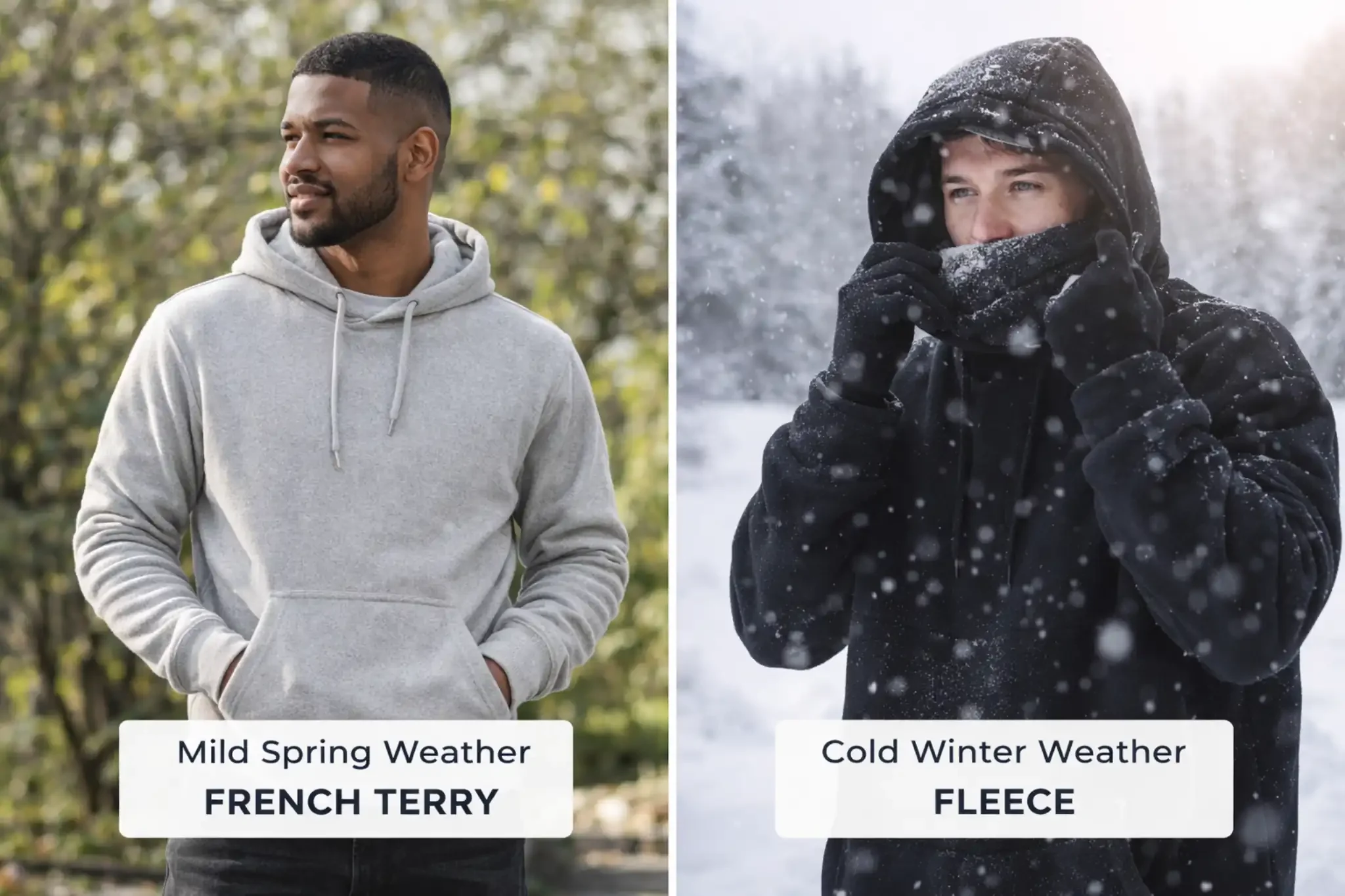
French terry is a loopback knitted fabric with a smooth outer surface and visible loops on the inside. These loops remain intact through finishing and washing.
Because the loop structure stays unbroken, French terry hoodies offer:
More predictable shrinkage control
Lower pilling risk
Cleaner print clarity
Better breathability
Stronger shape retention over time
Realistic French Terry Hoodie GSM (Finished)
GSM Range
Best Use
260–280 GSM
Standard private label hoodies
280–310 GSM
Premium and streetwear hoodies
310–330 GSM
Heavy French terry programs
Cotton terry above 330 GSM increases shrinkage instability and loop damage risk.
What Is Fleece?
Fleece hoodies begin as loop knit fabrics and then undergo mechanical raising (brushing) during finishing. This breaks the loops and lifts fiber ends, creating a plush nap on the inside.
This brushing process:
Increases warmth
Creates a soft, cozy hand-feel
Raises shrinkage variability
Increases pilling sensitivity
Adds finishing complexity and cost
Realistic Fleece Hoodie GSM (Finished)
GSM Range
Best Use
290–320 GSM
Winter fleece hoodies
320–340 GSM
Heavyweight fleece programs
350+ GSM
Industrial wear (not fashion-optimized)
Manufacturing Flow Differences
French Terry
Fleece
Knitting
Knitting
Dyeing
Dyeing
Compaction
Raising (brushing)
Softening
Shearing (leveling)
Cutting & Stitching
Compaction
Anti-pilling finish (optional)
Cutting & Stitching
Shrinkage & Stability Comparison
Factor
French Terry
Fleece
Shrinkage Control
Stable
More variable
Pilling Risk
Low
Medium–High
Surface Stability
High
Moderate
Bulk Consistency
Very consistent
Requires tighter QC
Warmth, Breathability & Climate Suitability
Feature
French Terry
Fleece
Warmth
Moderate
High
Breathability
High
Medium
Best Climate
Mild / All-season
Cold climates
Print & Embroidery Behavior
French terry provides a cleaner face for water-based and discharge printing with more stable embroidery results.
Fleece requires tighter curing control and embroidery stabilization to avoid hoop marks and surface distortion.
French terry and fleece hoodies may look similar online, but in manufacturing they follow two completely different engineering routes.
Choosing the wrong fabric can lead to unstable GSM, shrinkage failures, higher rework cost and delayed deliveries.
Mirthuni Apparel Sourcing Service helps private label brands engineer hoodie programs correctly from the yarn stage itself. From selecting the right fabric construction to controlling GSM, shrinkage, pilling and compliance, we support you through sampling and bulk production.
Share your hoodie tech pack, target market climate and quantity plan with us. Our team will recommend the correct fabric route and prepare your hoodie program for stable bulk manufacturing and on-time delivery.