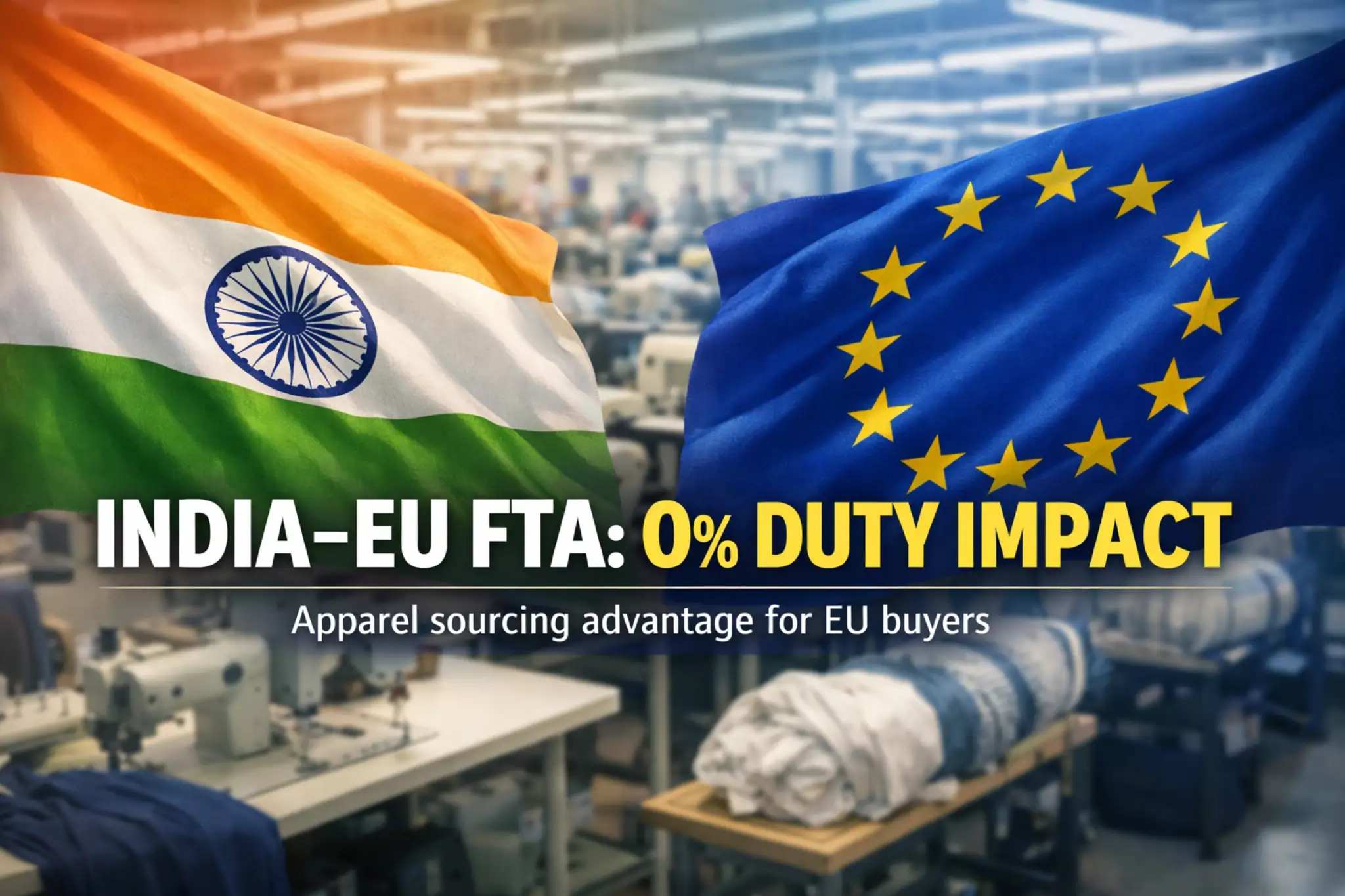
India EU FTA apparel sourcing is expected to become more competitive as tariff reductions improve landed cost for European buyers and sourcing managers. With discussions moving toward 0% import duty for key textile and apparel categories, Indian garments can become meaningfully more cost-effective across European shelves, improving purchasing flexibility for brands and importers.
For procurement teams managing seasonal planning, repeat programs, and supplier consolidation, this shift can directly influence sourcing volumes. The opportunity is not limited to one region. It benefits manufacturers across India’s major apparel clusters, from Tiruppur in Tamil Nadu (knitwear) to Ludhiana in Punjab (winter and layered categories). In simple terms, reduced duty can create stronger buyer confidence, higher repeat orders, and better long-term sourcing programs.
At the same time, duty advantage alone does not solve common sourcing challenges like sampling delays, inconsistent quality, or export documentation errors. That is where structured sourcing support and export execution becomes essential.
This blog explains the impact of the India EU FTA on apparel trade, what it means for European buyers, and how Mirthuni Apparel Sourcing Service supports knitted apparel sourcing and export execution for the European market.
Why India EU FTA apparel sourcing matters to European buyers
Every sourcing manager knows that factory price is only one part of the cost. The real business decision depends on landed cost, which includes:
Factory price (FOB or ex-works)
Freight cost and transit planning
Import duty and clearance charges
Delays and non-compliance risk
Rework, returns, and replenishment costs
A move toward 0% duty reduces landed cost pressure and gives brands more control over pricing. This is especially important for EU retail programs, where margins are often tight and delivery windows are fixed.
When the landed cost improves, European buyers can:
✅ protect margins without increasing retail price
✅ reinvest savings into better fabric, trims, and finishing
✅ increase order quantities per style and color
✅ expand a supplier program into more categories
✅ plan repeat production with stronger confidence
This is why India EU FTA apparel sourcing is being closely tracked by sourcing heads and procurement teams across the EU.
What 0% import duty changes in apparel buying decisions
1) Indian apparel becomes more competitive on EU shelves
The biggest impact of duty reduction is simple: the same garment becomes cheaper to import, even if the factory price stays unchanged.
For a European buyer, that can improve product viability for:
private label collections
season refresh programs
promotional or volume-driven assortments
multi-style bulk programs
Many EU brands avoid changing supplier bases too frequently. When a new cost advantage becomes available, it allows them to scale existing sourcing routes instead of constantly searching for new ones.
2) Bigger programs and longer repeat cycles become possible
Apparel manufacturing becomes more efficient when buyers place larger, consistent orders. Bigger programs can improve:
production scheduling
shade matching consistency
print and embroidery efficiency
finishing quality and packing output
supplier accountability and planning discipline
That means sourcing managers can build stronger repeat programs rather than treating every order as a one-off transaction.
3) Improved cost flexibility for quality-driven products
EU buyers increasingly focus on better standards, including:
consistent measurements and fit performance
reliable shrinkage control
high-quality stitching and finishing
clean packing and barcode-ready shipments
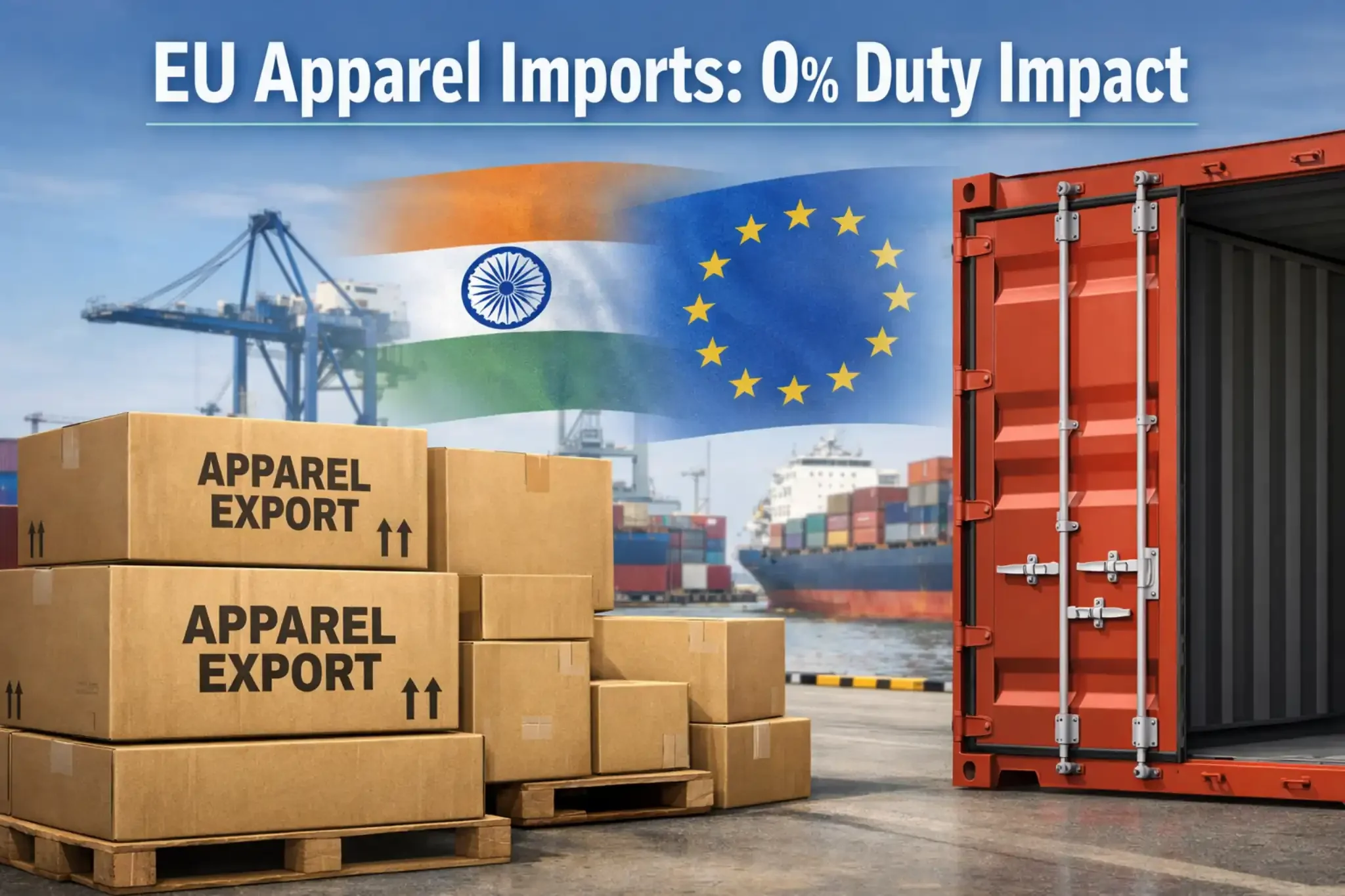
When duty is reduced, buyers gain budget room to choose better specifications without losing margin. This is valuable for categories where customer expectations are high.
India’s strongest advantage for EU sourcing: knitted garment manufacturing
India has capability across many categories, but one of the country’s strongest and most export-ready strengths is knitted apparel production.
This is especially true in Tiruppur, which has a complete ecosystem for:
yarn sourcing and knitting
dyeing and processing
compacting and shrinkage control
cutting and stitching production lines
printing and embroidery execution
garment washing and finishing
export packing and dispatch coordination
Because knitwear is often a repeat purchase category, European buyers rely heavily on consistent suppliers for:
men’s and women’s T-shirts
hoodies and sweatshirts
joggers and lounge bottoms
loungewear sets
sleepwear and pajama sets
kidswear knit garments
athleisure and basic active-inspired knits
For EU programs, the goal is not only production. It is stable execution across seasons.
This is why India EU FTA apparel sourcing is particularly important for buyers who are planning to scale knitwear categories.
India EU FTA apparel sourcing: what EU buyers should expect
Duty changes can improve competitiveness, but EU buyers still need supply chain control. A successful sourcing program depends on:
1) Sampling discipline
Even experienced buyers face delays if sampling is not structured. A correct sampling flow typically includes:
development sample or proto sample
fit sample approval
size set sample (if required)
pre-production sample confirmation
Sampling is where most quality issues are identified early, before bulk commitment.
2) Reliable quality checkpoints
EU buyers usually expect strong QC systems. Quality issues are expensive because they lead to:
shipment holds
rejection risks
urgent rework or replacement
customer returns and reputation loss
Even for basics like T-shirts, hoodie programs, or kidswear, quality supervision must be systematic.
3) Export-ready documentation planning
One of the most underestimated challenges in apparel sourcing is export execution. Production may be completed, but shipments can still get delayed due to document mistakes.
EU buyers benefit when exporters can support:
correct invoice and packing list formats
HS code alignment
shipping mark and carton labeling accuracy
clear dispatch coordination with forwarders
proper export documentation handling
This is where buyers prefer working with a structured sourcing service rather than uncoordinated supplier networks.
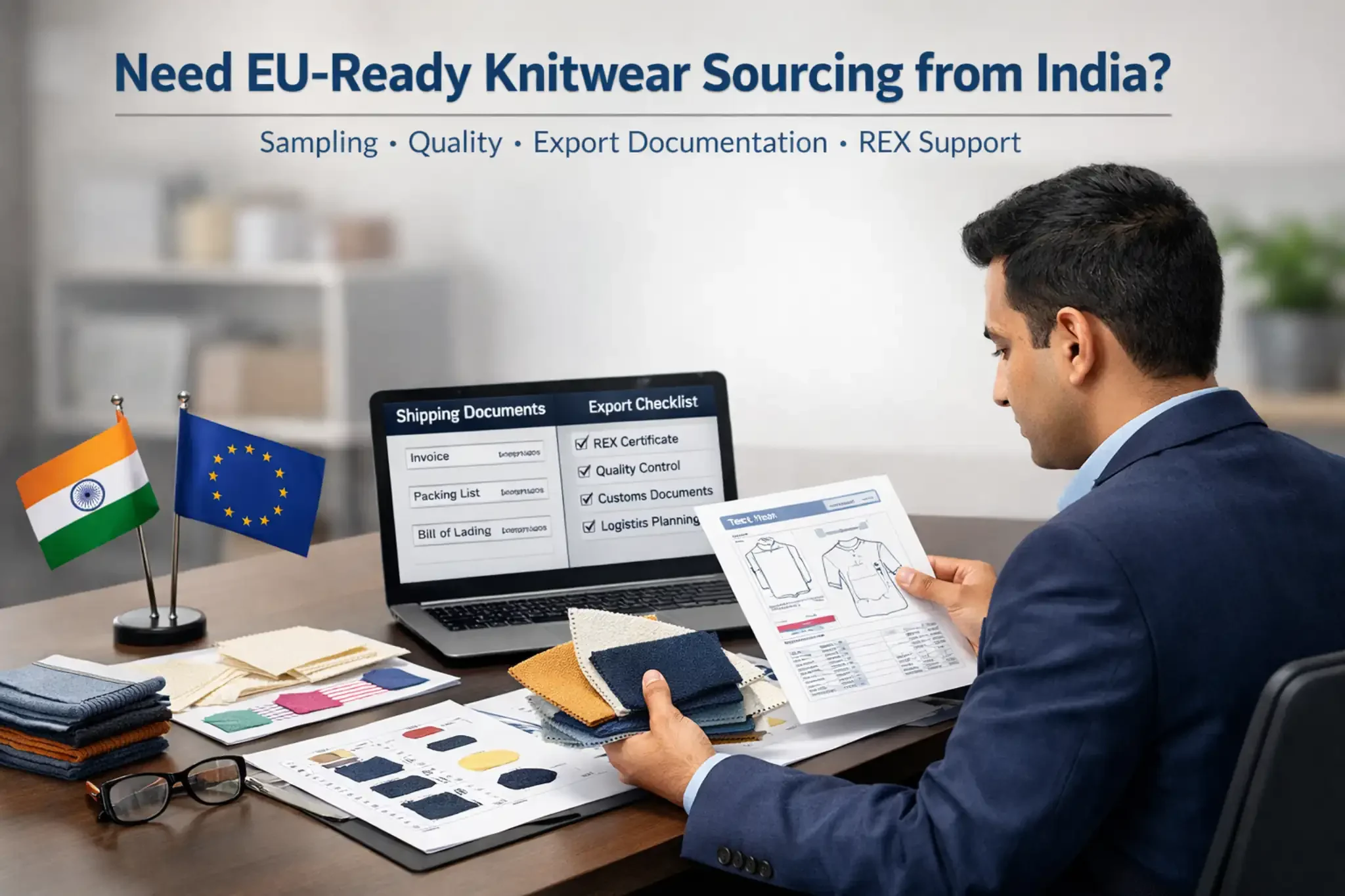
At Mirthuni Apparel Sourcing Service (MassIndia.in), we support European buyers with end-to-end sourcing coordination and export execution for knitted apparel.
We operate as a sourcing and execution partner for brands that want:
stable supplier coordination
clear communication and follow-up
consistent product quality
export-ready shipment execution
What we handle for EU programs
✅ Knitted garment sourcing and production coordination
We support a wide range of knitted garments suitable for EU market programs, including:
private label T-shirts
hoodies and sweatshirts
loungewear sets
sleepwear and pajama sets
kidswear knitted garments
custom knit bottoms and casualwear
✅ Fabric sourcing support
We help buyers shortlist the right fabric options based on:
GSM and drape requirement
soft hand feel expectation
shrinkage and recovery control
shade consistency needs
season-specific performance
✅ Sampling and cost planning
We coordinate the sampling flow and costing plan based on buyer requirements, helping the program move from idea stage to bulk-ready confirmation.
✅ Quality coordination and follow-ups
We support controlled checkpoints such as:
inline checks during stitching production
measurement verification and fit control
finishing checks and packing validation
carton-level inspection support
✅ Export documentation support including REX workflows
For European buyers, documentation is critical. Our team supports structured export execution and document coordination, including compliance-ready documentation workflows such as REX where applicable.
This gives EU sourcing managers confidence that dispatch will not get delayed due to missing paperwork or last-minute errors.
Why this is the right time to plan your EU sourcing program
FTA news creates attention, but real sourcing advantage comes from preparation.
For EU brands, this is a strong time to:
test India with sampling-based development
plan repeat knitwear programs from Tiruppur
build structured execution timelines
lock reliable suppliers for long-term capacity
strengthen documentation readiness for smoother dispatch
Even with improved duty benefits, performance depends on supplier reliability, quality control, and export execution.
That is why India EU FTA apparel sourcing should be approached as a strategic program, not as a quick price comparison.
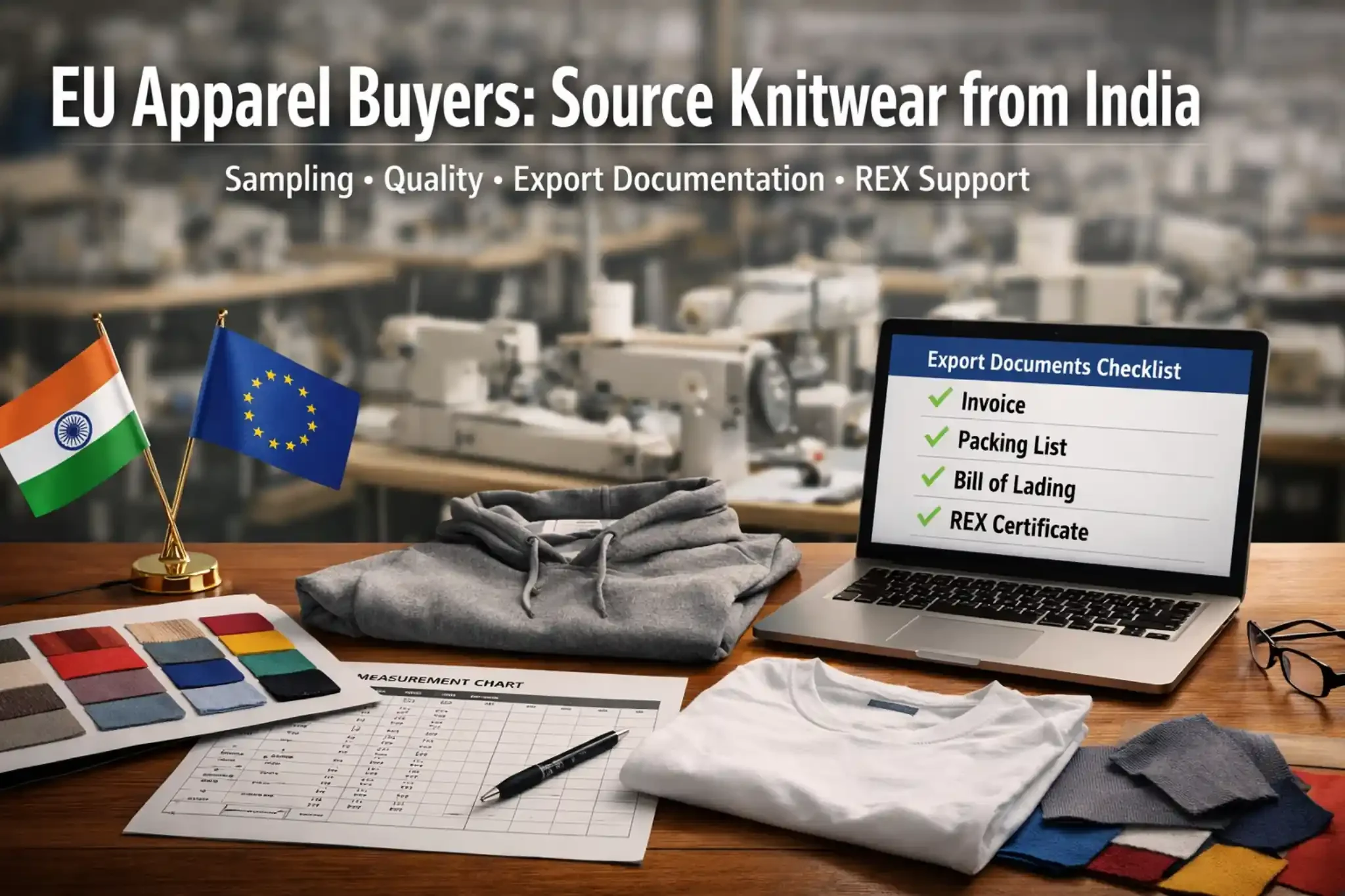
Final thoughts: Duty advantage matters, execution decides results
If the India EU FTA leads to meaningful duty reductions for apparel, it can support stronger long-term export growth for Indian garment manufacturing and create better cost flexibility for European buyers.
But sourcing success will still depend on:
clear tech packs and product definition
correct sampling flow and approvals
consistent production follow-up
controlled quality checkpoints
export-ready documentation and dispatch planning
Duty savings create opportunity. Execution is what makes the program profitable.
Contact Mirthuni Apparel for EU knitwear sourcing from India
If you are a European sourcing manager, apparel buyer, or private label brand looking to build a dependable supply chain, we can support your program with structured sourcing and export execution.
Mirthuni Apparel Sourcing Service supports:
✅ knitted garment development and production coordination
✅ sampling and costing support
✅ factory coordination and follow-ups
✅ quality supervision checkpoints
✅ export documentation and REX workflows
✅ shipment-ready dispatch planning for EU buyers
📩 Email your requirements to info@massindia.in
or submit your enquiry directly through https://massindia.in/contact
We will review your product details and revert with the best sourcing plan for your European collection.